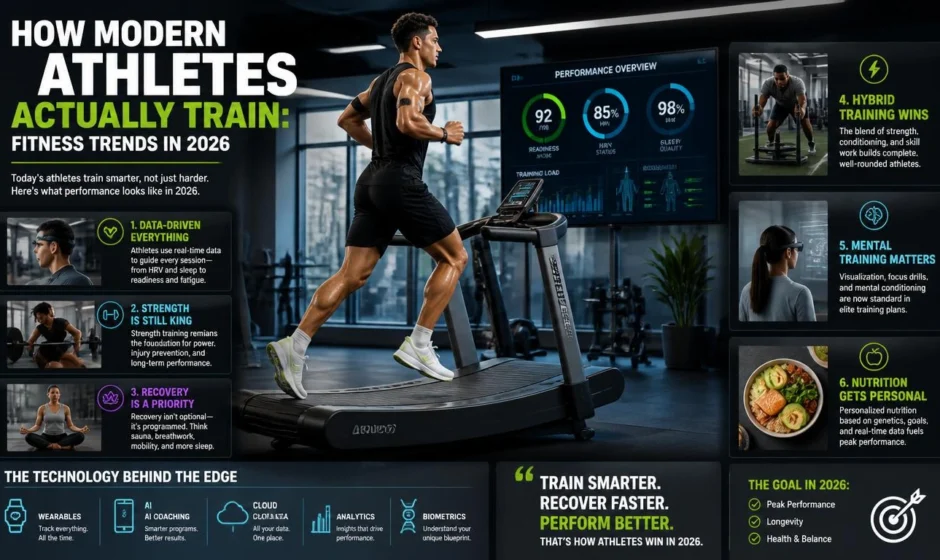

Having spent years actually training and competing, I’ve watched the culture around preparation shift in a way that’s honestly overdue: the old mentality of simply pushing harder, longer, and more often has given way to something considerably smarter. A match is never just the scoreboard result. It’s hours of preparation, recovery, coaching, and personal discipline behind it. And in 2026, the tools athletes use to manage that preparation have changed more than most fans realize. As covered in our broader look at September’s sporting events. The athletes competing across this month’s biggest moments are all shaped by this same underlying shift.
From “Train Harder” to “Train Smarter”
The single biggest cultural shift in athlete preparation right now is the move away from measuring effort by sheer training volume, toward managing training load deliberately against recovery capacity. A prevalent mistake I still see even among serious athletes in 2026 is overtraining without adequate recovery balance. Pushing physical limits without prioritizing the recovery side of that equation drastically increases injury risk. And actually sabotages performance by preventing the body from properly adapting to training demands in the first place. The Athlete Training and programs getting real, sustained results have internalized something that took the sports science field years to prove convincingly. Gains come from the balance between stress and recovery, not from stress alone.
Wearable Technology Has Changed What “Knowing Your Body” Actually Means
Wearable devices now track heart rate variability, sleep quality, training load, and muscle readiness continuously. Rather than athletes relying purely on subjective feel. Which, from personal experience, can be a genuinely unreliable narrator on a day when adrenaline masks real fatigue. AI-powered platforms take that continuous data and build dynamic training programs that adjust as an athlete’s body actually responds, rather than following a rigid, one-size-fits-all plan regardless of how someone is actually recovering that week. Coaches use this same data to spot patterns for example, noticing performance consistently dropping after several days of high-intensity work with limited recovery. And adjust a training schedule proactively instead of simply adding more volume and hoping for the best.
A Genuinely Important Caveat: Data Doesn’t Replace Context
Here’s something worth understanding clearly, and it’s a point I’d stress from real competitive experience: data doesn’t replace coaching or judgment, it supports it. A heart-rate reading can shift because of heat, stress, illness, hydration, or a dozen other factors that have nothing to do with actual fitness or readiness. The programs getting real value from this technology are the ones combining the data with genuine observation and communication between athlete and coach — not the ones treating a number on a screen as the final word on how someone should train that day.
Recovery Technology Has Become a Genuine Competitive Investment
Recovery has moved from an afterthought to a deliberate, technology-supported discipline in its own right. Cryotherapy remains one of the most established recovery methods for reducing inflammation and accelerating recovery, while newer approaches like pulsed electromagnetic field (PEMF) therapy and infrared therapy are gaining real traction for supporting cellular recovery, improving circulation, and reducing muscle soreness. Social media has played a genuine role in popularizing these methods quickly, though it’s worth noting that visibility and evidence aren’t the same thing — some recovery trends have stronger scientific backing than others, and it’s worth an athlete or coach actually understanding the mechanism behind a technique rather than adopting it purely because it’s trending.
What the Injury Data Actually Shows?
The shift toward smarter training and recovery isn’t just a feel-good narrative — the data backs it up. A comprehensive study analyzing over 3,300 players across 49 elite European teams over 18 seasons found that injury incidence in both training and competition decreased over that period, injury relapse rates also declined, and player availability for training and games actually increased. That’s a genuinely meaningful result: better recovery science and injury prevention strategies appear to be making athletes more available to compete, not less, even as competitive demands and schedules have generally intensified.
AI Coaching and Injury Prediction at the Highest Level
At the professional level, this data-driven approach has reached genuinely sophisticated territory. The NFL’s “Digital Athlete” system uses 38 cameras and machine learning to simulate in-game scenarios and predict injury risk, and it’s credited as a contributing factor in the league achieving its lowest concussion rate on record in 2024 — a 17% decrease from the prior year. That’s a concrete example of sports science technology directly translating into fewer injuries, not just better performance numbers on a dashboard.
Mental Health Is Now Written Into Training Programs Directly
One of the more genuinely welcome shifts in 2026: movement and training prescriptions increasingly account for mental health directly, not as an afterthought. The connection between regular physical activity and reduced anxiety and depression symptoms, better sleep, and stress resilience is well-established, and gyms, trainers, and clinicians are increasingly designing programs that reflect that understanding — incorporating mindfulness, breathwork, and stress-reduction techniques even into traditional strength and cardio programs, rather than treating mental health support as a separate, optional add-on.
Conclusion
Training in 2026 looks less like relentless volume and more like a deliberately managed system — wearable data informing decisions, AI adjusting programs in real time, recovery treated as seriously as the training itself, and mental health built directly into how programs are designed. Having lived through years of training under both mentalities, the shift toward smarter, more sustainable preparation isn’t just a technology story — it’s a genuinely better way to build a long, healthy competitive career, and the injury data increasingly backs that up.
Frequently Asked Questions
What is the biggest change in how athletes train in 2026?
The biggest shift is moving from measuring effort by sheer training volume toward deliberately managing training load against recovery capacity, using wearable data and AI-driven programs rather than a fixed, one-size-fits-all training plan.
Do wearable devices actually improve athletic performance?
They can, when combined with proper context and coaching. Wearables track metrics like heart rate variability, sleep, and training load, but factors like heat, stress, or illness can affect readings, so data works best alongside genuine observation rather than replacing coaching judgment entirely.
Has better recovery science actually reduced athlete injuries?
Yes, according to available data. A study of over 3,300 elite European players across 18 seasons found injury incidence and relapse rates both decreased over that period, while player availability for training and games increased.
What is the NFL’s “Digital Athlete” system?
It’s an AI-powered system using 38 cameras and machine learning to simulate in-game scenarios and predict injury risk, credited as a contributing factor in the NFL’s lowest recorded concussion rate in 2024.
Why is mental health now part of athlete training programs?
Regular physical activity is well-established to reduce anxiety and depression symptoms and improve sleep and stress resilience, leading more gyms, trainers, and clinicians to directly incorporate mindfulness and stress-reduction techniques into training programs.