
Two University of Mississippi students died this week in what authorities are treating as two separate investigations, and packaged kratom purchased from a retail store was found during both inquiries, according to law enforcement. Authorities are investigating the deaths separately and have not yet confirmed if the victims’ deaths are connected or if kratom or any other substance played a role in either death. The identities of the students have not been officially released.
What Happened in Oxford, Mississippi?
The Lafayette County coroner confirmed to local media on Tuesday that two University of Mississippi students had died, and university police are working with state and local law enforcement to investigate the cause of death. Lafayette County Coroner Glenn Coleman said the two students died Monday.
According to a Lafayette County dispatch recording obtained by local news, public safety officials were dispatched to Stewart Hall on the Ole Miss campus just after 1:30 p.m. Monday, September 21, for a report of a “possible overdose,” and first responders were told the individual was unresponsive with CPR in progress. Details about the second student’s death have not been made public in the same way.
What Authorities Have Confirmed?
- University officials confirmed the two student deaths in a statement Tuesday, September 22, saying: “The University is heartbroken by the recent loss of two students and extends our condolences to their families, friends, and loved ones during this difficult time.”
- Vice Chancellor for Student Affairs Dr. Shawnboda Mead stated the Coroner’s Office confirmed two student deaths, and that University Police are not aware of any additional student deaths.
- Mead’s statement also directly addressed — and disputed — social media rumors suggesting additional deaths had occurred.
- The Oxford Police Department said there is no confirmed evidence indicating that the two deaths are connected. However, packaged kratom sold from a retail store was found during both investigations.
- At this time, officials have no confirmed evidence linking the two deaths, nor confirmation that kratom or any other substance contributed to either death.
- The cause of death remains under investigation, with campus police in contact with local and state law enforcement.
Was Kratom Connected to the Deaths?
This is the point authorities have been most careful about, and readers should be too. Law enforcement said Tuesday it is not clear if the deaths are linked, and authorities have not confirmed that kratom or any other substance was a contributing factor in either death. Lafayette County Metro Narcotics said it has no information that the two deaths are linked, but “packaged Kratom sold from a retail store was found during both investigations.”
The presence of a product at a scene is not the same as proof that it caused a death. Establishing an actual cause of death typically requires autopsy findings, toxicology results, medical history, and other forensic evidence — none of which has been publicly released in either case as of this writing.
Despite that uncertainty, authorities issued a public caution. Lafayette County Metro Narcotics wrote: “Out of an abundance of caution, we encourage everyone to avoid kratom and any other medication or substance that was not prescribed to you or obtained from a trusted, regulated source.”
Mississippi Attorney General Lynn Fitch’s office also weighed in, though in the broader context of overdose prevention rather than a confirmed kratom link. Her office noted it has trained Ole Miss students on administering Narcan, and following the deaths, her office stated that public awareness campaigns about counterfeit pills and overdose response remain a priority.
The Two Cases: What’s Known About Each
First case: A call reporting a possible overdose came from Stewart Hall on campus around 1:30 p.m. Monday, September 21; the individual was unresponsive and CPR was in progress when first responders arrived.
Second case: A separate death was reported around the same time period; specific details about location and circumstances have not been publicly disclosed by authorities.
Both are being handled as independent investigations. No connection between the two has been established.
Campus Reaction
The university community has responded with visible grief. Students have been reported hanging black ribbons at sorority and fraternity houses, and Greek organizations have reminded members not to take anything not specifically prescribed to them by a doctor. University leadership has offered condolences and directed students toward support resources, though a detailed public list of counseling or memorial arrangements had not been published as of this writing.
What We Still Don’t Know
- What caused either student’s death
- Whether the two deaths are connected in any way
- Whether toxicology testing has been completed or when results will be released
- Whether kratom was present in either student’s system
- Whether the kratom product found was tested, and if so, for what
- Whether either student had consumed the product recovered by investigators
- Whether other substances were involved
- Whether either student had an underlying medical condition relevant to their death
- Whether authorities will release additional details, including the students’ identities, in the coming days
What Is Kratom?
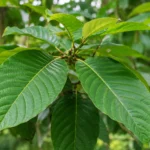
Kratom is the common name for Mitragyna speciosa, a tree native to Southeast Asia. Its leaves are dried and sold as powders, capsules, teas, or concentrated extracts. Its two most-studied compounds, mitragynine and 7-hydroxymitragynine (7-OH), interact with opioid receptors in the brain — the pharmacological basis for kratom’s reported stimulant- and opioid-like effects. Concentrated modern products can differ significantly in potency from traditional leaf preparations.
What Are the Effects and Risks of Kratom?
Users report both stimulant-like effects (energy, alertness) and opioid-like effects (relaxation, pain relief), according to federal health researchers. The FDA warns against kratom use, citing documented risks including liver toxicity, seizures, and substance use disorder, and states that deaths have in some cases been associated with kratom use — though usually in combination with other substances, which complicates efforts to isolate kratom’s specific role. Kratom is not FDA-approved as a drug, dietary supplement, or food additive, meaning products are not federally regulated for purity or accurate labeling.
What Is 7-Hydroxymitragynine (7-OH)?
7-OH occurs naturally in kratom leaf in small amounts, but manufactured products with concentrated 7-OH have emerged as a distinct and more potent category — one federal regulators have specifically targeted. On August 26, 2026, the DEA classified three synthetic kratom-derived compounds — mitragynine pseudoindoxyl, MGM-15, and MGM-16 — as Schedule I controlled substances, with 7-OH currently under review for emergency scheduling. Health officials and addiction specialists have noted that 7-OH products are sometimes marketed misleadingly as ordinary kratom, and that products across the category have been found contaminated with undisclosed additives.
Why Kratom Can Be Difficult to Evaluate in Individual Death Investigations?
Toxicology can identify whether a substance was present in someone’s system, but interpreting that finding as a cause of death is a separate, more complex forensic step. Confounding factors — including polysubstance use, product contamination or mislabeling, and underlying health conditions — routinely complicate these evaluations in cases involving kratom generally. These are general scientific and investigative realities, not claims about what happened in the Ole Miss cases specifically, where no cause of death has been announced.
The Broader Context: A National Surge
This story lands amid a documented nationwide increase in kratom-related cases. At the telehealth clinic Boulder Care, the share of new patients who reported using kratom products climbed from 3% in September 2025 to 8% in July 2026, and reached 14% by August — a jump one clinic official called “quite an explosion.” Addiction clinics nationally report a growing number of cases tied to kratom and 7-OH products, along with increasing severity of withdrawal symptoms. Separately, Iowa Poison Control alone logged 68 kratom exposure calls so far in 2026, a 467% increase over two years. A main component of kratom was also reportedly found in the systems of two other prominent overdose deaths in Memphis earlier this year, and Tennessee moved to ban kratom this summer.
Current U.S. Regulatory Context
Natural kratom leaf is not federally scheduled, but more than 20 states — including Mississippi’s neighbors — have adopted Kratom Consumer Protection Act frameworks regulating age limits, testing, and labeling, while roughly six to seven states ban it outright. Federal action has so far focused on concentrated derivative compounds rather than the raw leaf itself.
Current Investigation and What Happens Next
Both deaths remain under active, separate investigation by Lafayette County and Oxford-area authorities, with state involvement. Expect updates as autopsy and toxicology results become available — a process that in similar cases has taken days to weeks. Any additional statements from the university, the coroner’s office, or law enforcement will likely address whether a cause of death has been determined and whether the cases are found to be connected.
Frequently Asked Questions
What happened to the Ole Miss students?
Two University of Mississippi students died on Monday, September 22, 2026, in what authorities are investigating as two separate incidents.
Were the two Ole Miss deaths connected?
Authorities have said there is no confirmed evidence linking the two deaths; they are being investigated separately.
Was kratom found during the investigations?
Yes. Packaged kratom purchased from a retail store was found during both investigations, according to Lafayette County Metro Narcotics.
Did kratom cause the Ole Miss students’ deaths?
This has not been confirmed. Authorities have explicitly said they have not established that kratom or any other substance contributed to either death.
Have toxicology results been released?
Not as of this writing. Toxicology and autopsy findings, if released, may provide more information.
Is kratom legal in Mississippi?
Yes, kratom is not banned outright in Mississippi at this time, though this can change and should be verified against current state law.
Is kratom dangerous?
The FDA warns against its use, citing risks of liver toxicity, seizures, and substance use disorder, though it is not approved or regulated as a drug or supplement.
Latest Update
This article reflects information available as of September 22, 2026. It will be updated if authorities release additional information about the causes of death, toxicology results, or whether the two cases are found to be related.