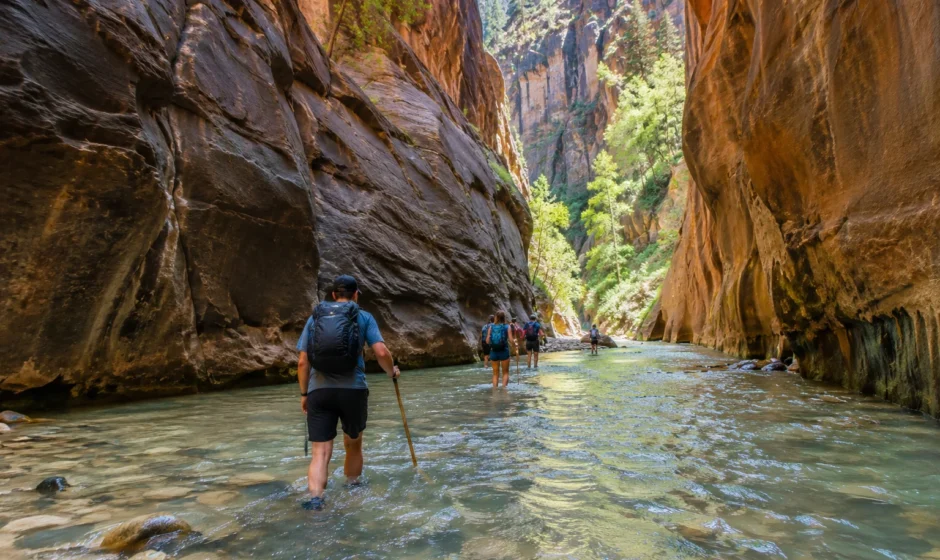

Yes. Most people hike the Narrows without a guide, and the most popular route requires no permit, reservation, or guide at all. The answer gets more specific depending on which version of the hike you’re doing. This guide breaks down both routes, what permits you actually need, and when hiring a guide genuinely adds value.
Can You Hike the Narrows Without a Guide?
Yes. The bottom-up route, starting at the Temple of Sinawava and heading upstream toward Big Spring, requires no permit and no guide. It’s the version most visitors do, and thousands of people complete it independently every year, including families and first-timers.
The 16-mile top-down route always requires a wilderness permit, whether or not you hire a guide. A permit is not the same thing as a guide. You can get the permit yourself and hike unguided.
Do You Need a Permit for the Narrows?
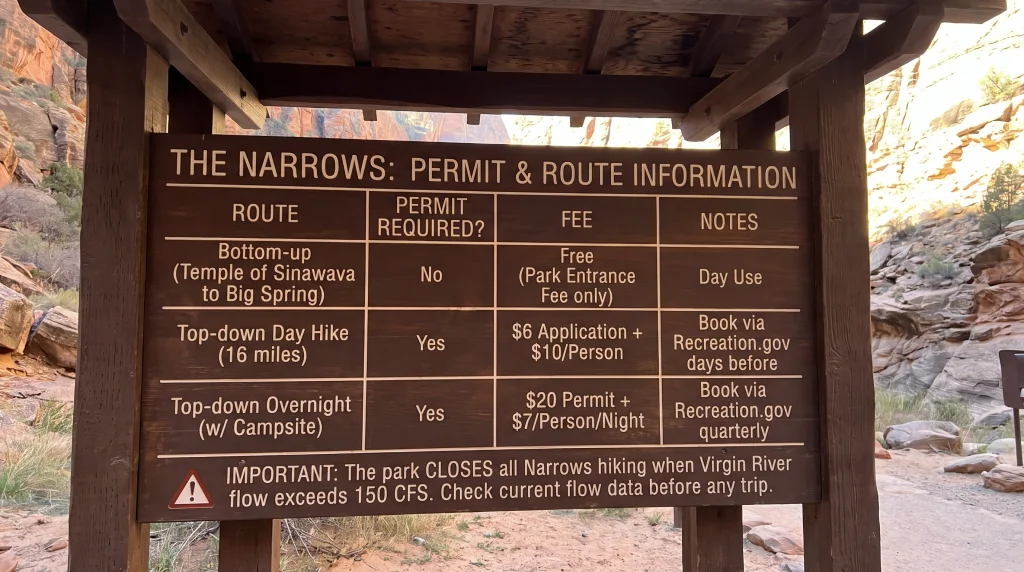
| Route | Permit Required? | Fee |
| Bottom-up (Temple of Sinawava to Big Spring) | No | Free (just park entrance fee) |
| Top-down day hike (16 miles) | Yes | $6 application + $10 per person |
| Top-down overnight (with campsite) | Yes | $20 permit + $7 per person per night |
Top-down permits are booked through Recreation.gov. Day-use permits become available a few days before your date. While overnight campsite permits release quarterly, months in advance. The park closes all Narrows hiking, guided or not, whenever the Virgin River’s flow exceeds 150 cubic feet per second. This threshold applies regardless of experience level or permit type. So check current flow data before any trip, not just during rainy season.
Is the Narrows Safe to Hike Without a Guide?
Yes, the Narrows is safe to hike without a guide under normal conditions. The trail is well-marked, other hikers are nearby throughout and you can turn around at any point. The real risk on any Narrows route is flash flooding. Summer monsoon season (July-August) carries the highest danger, since storms miles upstream can flood the canyon with little warning at your location.
Check the flash flood forecast at the visitor center or online before starting, every time. Turn back immediately if water rises, turns muddy, or you hear rumbling upstream.
The top-down route carries more inherent risk simply due to length. It takes 10-14 hours for most hikers, wades through chest-deep water in sections, and has fewer easy exit points if conditions change.
When Is a Guide Actually Worth It?
A guide isn’t required, but it helps in specific situations:
- First-time top-down hikers benefit from route knowledge and pacing across 16 remote miles
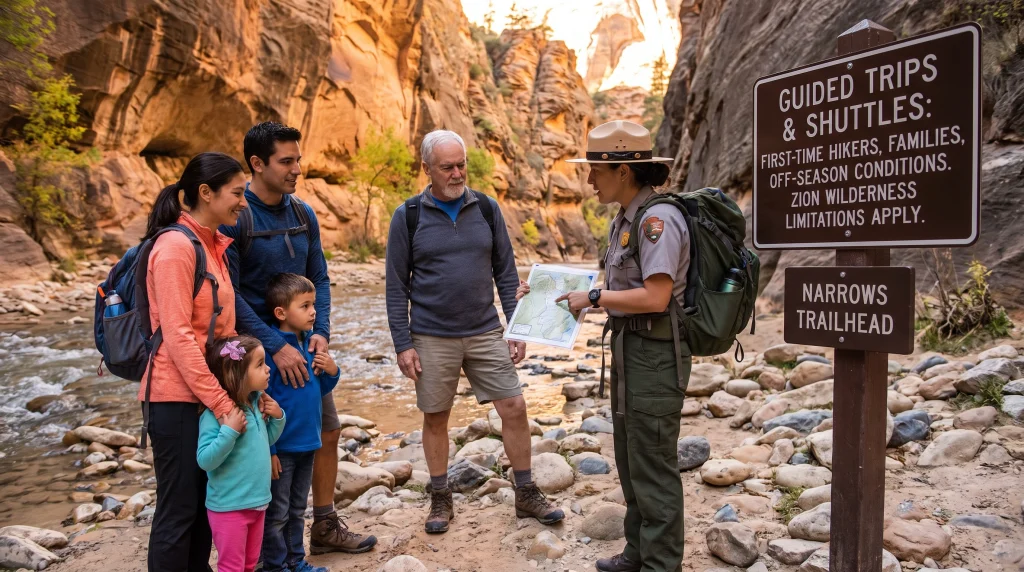
- Families with young kids often value a guide’s judgment on turnaround points
- Off-season hikers (winter, early spring) face colder water and higher flow, where local knowledge of current conditions matters more
- Anyone unsure about reading river conditions: judging depth, current, and footing may simply feel more confident with an experienced person present
Worth knowing before booking: Zion Wilderness restricts commercial guiding on technical routes within the park, and guide companies operating Narrows trips typically can’t accompany hikers past certain points inside the canyon itself. In practice, many “guided” Narrows trips function as gear rental plus a pre-hike safety briefing, with a marked turnaround point built into the trip. Confirm exactly what’s included, and how far the guide actually goes with you, before booking.
What Gear Do You Need for a Self-Guided Hike?
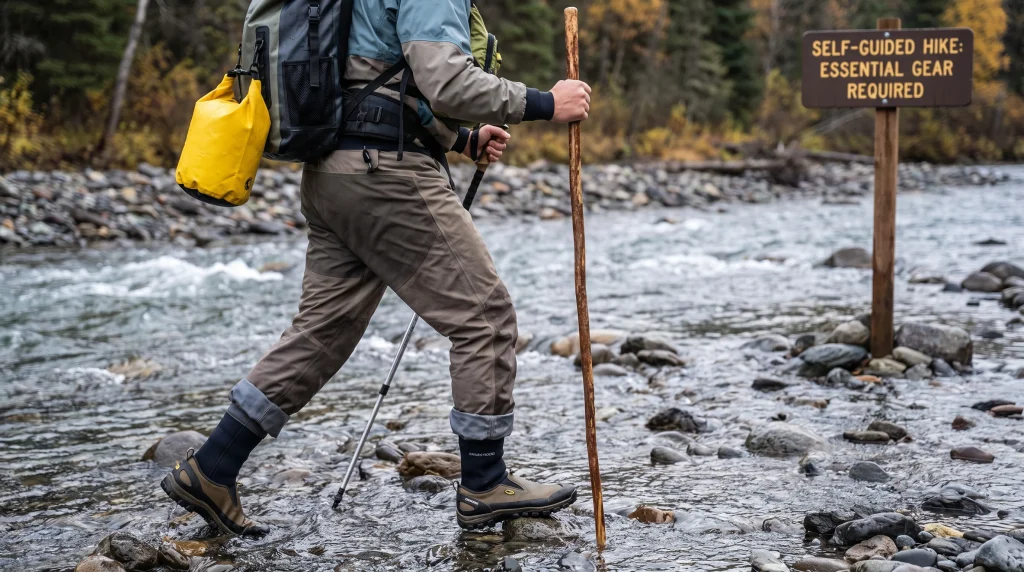
A hiking stick or trekking pole helps significantly with stability on the uneven, slippery riverbed. Closed-toe water shoes with real grip matter more than any other gear choice. Sandals and regular sneakers both perform poorly on wet rock.
In cooler months (roughly October through May), rent a dry suit or neoprene socks. Water temperatures stay cold even when air feels warm. A dry bag protects your phone and any other electronics from an unexpected dunk.
Best Time to Hike the Narrows
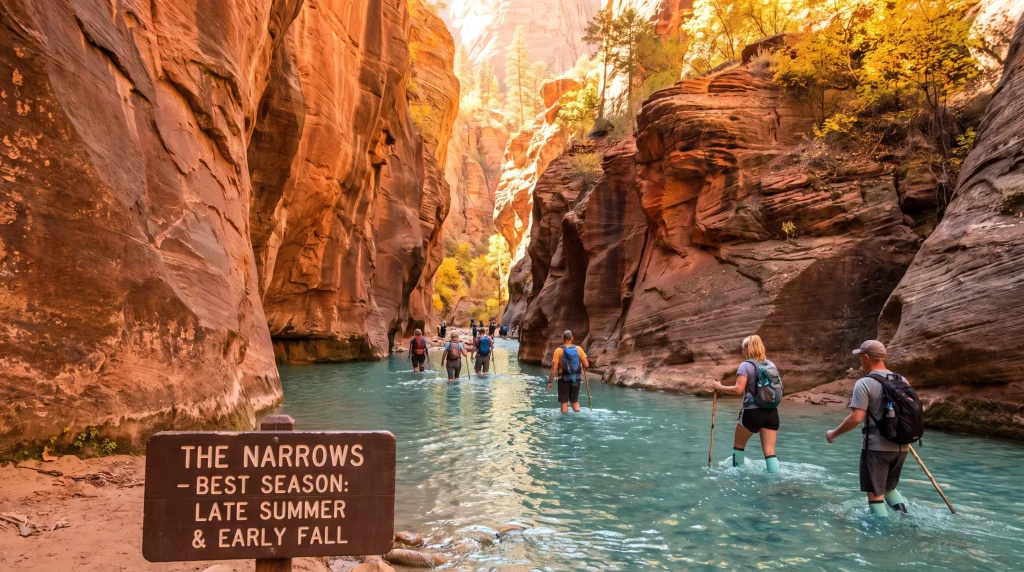
Late summer and early fall (late August through October) generally offer the most reliable balance of lower flash flood risk and warmer water. Spring brings higher water levels from snowmelt, plus colder temperatures that often require a dry suit. Summer (June-September) brings the highest visitation and the highest flash flood potential, along with the warmest water and air temperatures.
Quick Answer Recap
- No, you don’t need a guide for the standard bottom-up Narrows hike, and no permit either
- Yes, a permit is required for the 16-mile top-down route, but that’s separate from needing a guide
- A guide can help with pacing, safety judgment, and off-season conditions, but most guided trips have a fixed turnaround point and less flexibility than going independently
Frequently Asked Questions
Do you need a permit for the bottom-up Narrows hike?
No. The bottom-up hike from the Temple of Sinawava to Big Spring requires no permit, reservation, or fee beyond standard park entrance.
How far can you hike the Narrows without a permit?
About 3.6 miles one way, from the Temple of Sinawava to Big Spring. Beyond that point, you’re on the permitted top-down route.
Is the Narrows hike safe for beginners?
The bottom-up route works well for beginners and families, since it’s short, well-traveled, and lets you turn around anytime. The 16-mile top-down route is more demanding and better suited to experienced hikers.
What’s the biggest safety risk in the Narrows?
Flash flooding is the primary danger, especially during summer monsoon season. The park also closes the entire hike, regardless of permit or guide status, once river flow passes 150 cubic feet per second.
For a broader look at planning a Zion trip, including shuttle info and other permitted hikes, see our full Zion National Park guide.
How long does it take to hike the Narrows?
The bottom-up route to Big Spring and back typically takes 3-5 hours, depending on pace and how far you go. The full 16-mile top-down route takes most hikers 10-14 hours in a single day.
Do I need a walking stick for the Narrows?
It’s not mandatory, but strongly recommended. The riverbed is uneven and slippery, and a stick significantly improves stability, especially in deeper or faster-moving sections. Rental shops in Springdale rent them alongside water shoes.
What do you need to walk the Narrows?
Closed-toe water shoes with good grip, a walking stick, and a dry bag for electronics are the essentials. In cooler months (roughly October-May), add a dry suit or neoprene socks, since water stays cold regardless of air temperature.
Can you do the Narrows in one day?
Yes for both versions. The bottom-up hike is naturally a few hours within one day. The top-down 16-mile route is also typically done as a single long day hike, though overnight permits exist for hikers who prefer to camp partway through.
What time should you start the Narrows hike?
Early morning, ideally by 7-8 a.m., is recommended for the bottom-up hike to beat crowds and afternoon heat. Top-down hikers need to start even earlier, often before sunrise, given the 10-14 hour hike length and limited shuttle timing to Chamberlain’s Ranch.