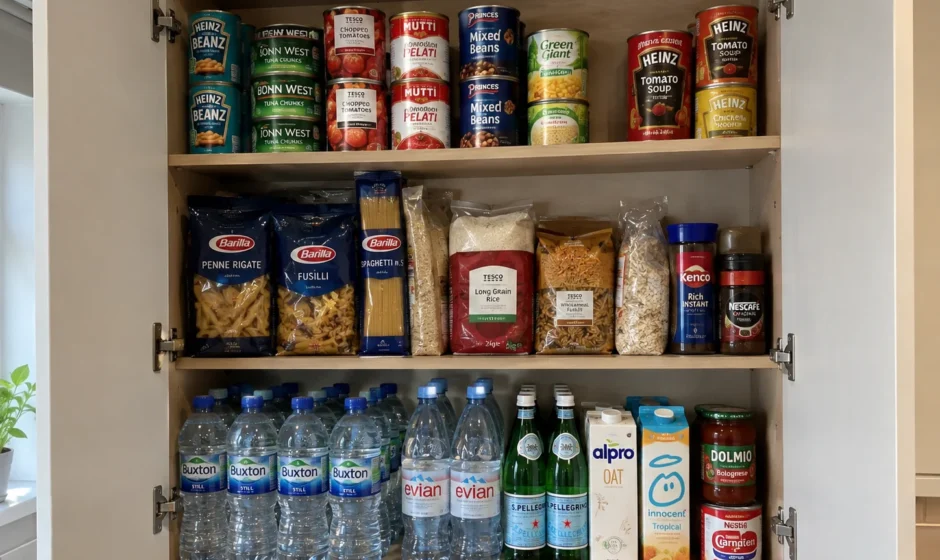

UK households are being told to stock up on food because of a forecast severe El Niño event and warnings about food supply chain resilience. This is preparedness advice, not a shortage warning. Environment Secretary Dame Angela Eagle made the comments to the Guardian on 3 September 2026. She linked the advice to what forecasters describe as one of the strongest El Niño events in generations.
Her comments followed a National Audit Office report published on 4 September 2026. It warned that Defra has not done enough to help households and businesses prepare for food supply shocks. This isn’t a new policy created overnight. It builds on existing GOV.UK Prepare guidance that has recommended household emergency supplies since 2023.
What Angela Eagle Actually Said?
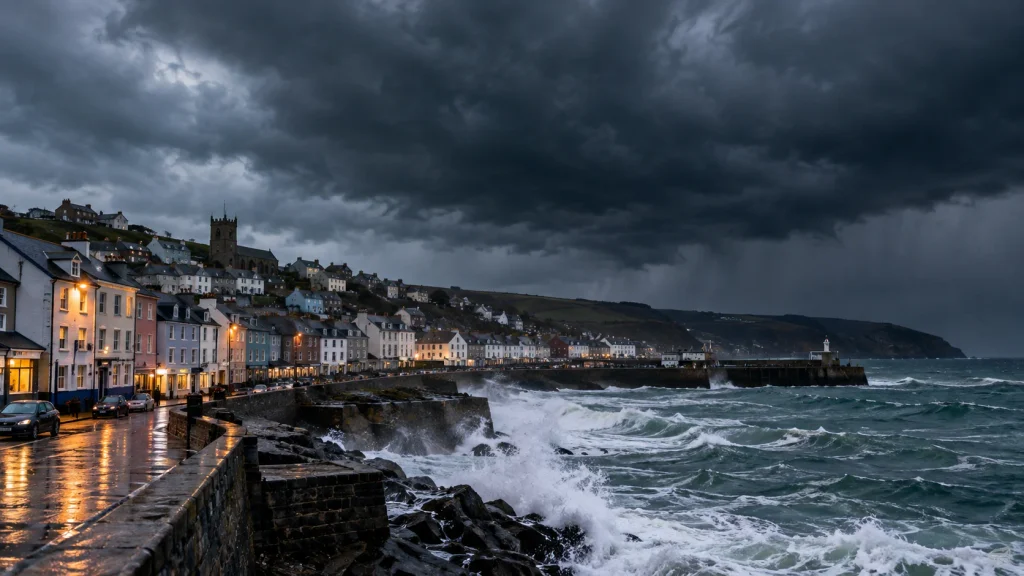
Dame Angela Eagle told the Guardian: “We’re about to experience probably the largest El Niño that has ever been seen, and that will lead to drier summers, wetter winters, with more extreme storms in this country.”
She added that a food store could help households manage before emergency services arrive. Her exact words were: “If you’ve got a store of a bit of food that can keep you going for a while before the emergency services can get to you, you’re going to be a lot better off.”
These comments describe general resilience advice. They do not describe a specific, imminent food shortage.
What the National Audit Office Report Found
The NAO report was published on 4 September 2026. It assessed how well Defra has prepared the UK’s food supply chain for disruption.
The report concluded that Defra has “done too little” to help households, businesses, and communities build resilience. It specifically referenced risks from supply chain disruption, extreme weather, cyber-attacks, and disease outbreaks.
NAO head Gareth Davies said: “Recent disruptions have shown the resilience of the UK’s food supply chain, but risks are increasing in likelihood and severity.”
The report also found that UK households are less prepared for emergencies than households in several other countries. It cited nations including Finland and Sweden as more prepared comparators.
Separately, the NAO found Defra lacks some legal powers it may need during a genuine crisis. This includes the power to direct businesses to take emergency action if a serious disruption occurred.
The El Niño Forecast Explained
El Niño is a naturally occurring climate pattern. It happens when sea surface temperatures in the tropical eastern Pacific rise significantly above average.
According to the Met Office, this year’s event is forecast to exceed 3°C above average sea temperatures. That would make it the largest El Niño event since the 19th century, based on current data.
The World Meteorological Organization has said there is now a near-100 per cent probability of El Niño conditions persisting through February 2027. It expects the event to become “very strong” before the end of 2026.
For the UK specifically, El Niño tends to bring wetter, stormier winters. Globally, it raises drought risk across the tropics, southern Africa, and north-eastern Australia.
Is This Connected to a Wider Government Campaign?
Yes. This advice sits within a broader national resilience campaign the Cabinet Office confirmed on 14 July 2026, in its Annual Statement on National Resilience.
That statement confirmed a public information campaign would launch before the end of 2026. It builds on GOV.UK’s existing Prepare guidance, which has advised households since 2023 to keep several days of basic supplies.
Chief Secretary to the Prime Minister Darren Jones said the campaign responds to risks including severe weather and cyberattacks. He explained these could affect “access to power, water, phone signal or local shops to get food.”
Jones added: “The government will do all it can, and we are well prepared, but we can all play our part to keep ourselves and our loved ones safe.”
Is the UK Facing a Food Shortage?
No confirmed, imminent food shortage has been announced. The advice reflects long-term resilience planning, not a response to a current supply crisis.
The UK imports more than a third of its food. Much of this arrives through four major ports: Dover, Felixstowe, Southampton, and London Gateway.
Around 13 per cent of UK food imports come from regions considered climate-exposed, including India. This is a structural vulnerability the NAO highlighted, not evidence of a current shortage.
One industry voice has used stronger language. Phil Pluck, chief executive of the Cold Chain Federation, told the BBC the UK is “pretty close to crisis” due to global shipping disruption and cyber-attacks targeting supply chain pinch points. This is an industry assessment, not an official government position, and should be read as one expert’s view rather than confirmed fact.
What GOV.UK Prepare Actually Recommends
GOV.UK’s existing Prepare guidance sets out specific, practical recommendations for household emergency supplies. This guidance predates the current news cycle and isn’t a new, sudden instruction.
The guidance recommends 2.5 to 3 litres of drinking water per person, per day, for survival needs. It suggests around 10 litres per person when cooking and hygiene use is included.
Recommended food supplies focus on items that don’t require cooking or refrigeration. This includes tinned goods, dried food, and other long-life items that can be rotated through normal household use.
Other suggested items include a torch, a battery-powered or wind-up radio, a portable phone power bank, first aid supplies, spare batteries, and important phone numbers written on paper.
This list is designed for short-term disruption. It is not designed around a long-term survival stockpile.
How Prepared Are UK Households Currently?
According to the 2026 UK Public Survey of Risk Perception, Resilience and Preparedness, preparedness levels are limited. Twenty-five per cent of respondents said they could only manage for one day or less without power, gas, or water.
This is the kind of gap the government’s campaign is designed to address. The goal is to help more households manage short disruptions independently, so emergency services can focus on people who need direct help.
What Is Confirmed Versus Speculation
It is confirmed that Angela Eagle made these comments on 3 September 2026, and that the NAO published its report the following day. It is also confirmed that GOV.UK Prepare guidance has existed since 2023.
It is confirmed that a wider national resilience campaign was formally announced on 14 July 2026, and is expected to launch later this year.
It is not confirmed that a food shortage is imminent. No government department has issued an emergency instruction telling the public to stockpile food urgently.
A viral social media post on 18 September 2026 claimed the government was telling citizens to stockpile food and water specifically to prepare for war, crediting this claim to the BBC. This specific framing has not been confirmed by any UK government department. It appears to combine three separate, real stories, the El Niño advice, the NAO report, and general national security commentary, into one inaccurate claim.
Practical Advice Without Panic Buying
Building a food store gradually, through normal shopping, is different from panic buying. The government’s guidance does not recommend emptying shelves or buying in bulk all at once.
A sensible approach involves adding a few extra long-life items during normal weekly shops. This avoids sudden demand spikes and keeps the process manageable.
Useful long-life foods include tinned vegetables, tinned meat or fish, pasta, rice, and UHT milk. These items store well at room temperature and don’t require refrigeration.
Households with specific dietary needs, infants, or pets should factor in relevant supplies separately. This includes any allergy-safe alternatives, baby formula, or pet food with a reasonably long shelf life.
Rotating stock through normal meals, rather than leaving it untouched indefinitely, helps avoid waste and keeps supplies fresh.
Frequently Asked Questions
Has the UK been told to stockpile food?
Not exactly “stockpile” — households have been advised to keep a few days of basic supplies. This comes from GOV.UK’s existing Prepare guidance (since 2023), reinforced by Environment Secretary Angela Eagle’s comments on September 3, 2026, tied to a forecast severe El Niño. It’s resilience advice, not an instruction to build a large stockpile.
What to stockpile in case of war in the UK?
No UK government department has issued war-specific stockpiling advice. A viral social media post on September 18, 2026, made this claim and wrongly attributed it to the BBC — it isn’t confirmed. The general GOV.UK Prepare list (water, long-life food, torch, radio, first aid) is designed to cover any disruption, including severe weather or infrastructure failure, not a war-specific scenario.
What are the top 10 foods to stockpile?
GOV.UK Prepare doesn’t publish a ranked “top 10,” but recommends non-perishable food that doesn’t need cooking. Based on that guidance, sensible options include: tinned vegetables, tinned meat or fish, tinned soup, pasta, rice, UHT milk, tinned fruit, peanut butter, crackers or crispbread, and dried pulses or lentils.
Why are we being told to stock up on food?
Because of the convergence covered in the main article: the Environment Secretary’s September 3 El Niño comments, a National Audit Office report the next day criticizing Defra’s food-supply resilience planning, and a wider Cabinet Office national resilience campaign announced back in July 2026.
What food shortages are coming in the UK?
None have been confirmed. No government source has announced an imminent shortage. The advice is about long-term resilience against possible future disruption (extreme weather, cyber-attacks, supply chain shocks), not a response to a current or forecast shortage.
Should I be stockpiling in the UK?
That’s a personal decision, not something with an official “yes/no” answer. What GOV.UK actually recommends is a few days of basic supplies for short-term disruption, built up gradually through normal shopping, not a large stockpile.
Should I be preparing for a food shortage?
There’s no confirmed shortage to prepare for specifically. General household resilience (a few days of food and water) is sensible regardless, per standing GOV.UK guidance, but nothing points to a need for shortage-specific preparation right now.
What are the best foods to stockpile in the UK for an emergency?
Per GOV.UK Prepare’s criteria (long shelf life, no refrigeration, no cooking required): tinned vegetables, tinned meat or fish, tinned soup, pasta, rice, UHT milk, tinned fruit, dried pulses, crackers, and peanut butter or similar spreads.
Why are people searching for “stock up on food” in the UK?
Because the Environment Secretary linked existing government preparedness advice to a forecast severe El Niño event on 3 September 2026, generating significant news coverage.
Is the UK facing a food shortage?
No confirmed, imminent shortage has been announced. The advice reflects long-term resilience planning following a National Audit Office report on supply chain risk.
What does GOV.UK actually recommend keeping at home?
GOV.UK Prepare recommends 2.5 to 3 litres of water per person daily, plus long-life food that doesn’t need cooking, a torch, a radio, and basic first aid supplies.
Is this advice related to war preparation?
No government department has confirmed this. A viral social media post made this claim on 18 September 2026, but it appears to combine separate stories inaccurately.
Should I panic buy food right now?
No. The government’s advice describes gradual, sensible preparation through normal shopping, not urgent bulk buying or emptying supermarket shelves.