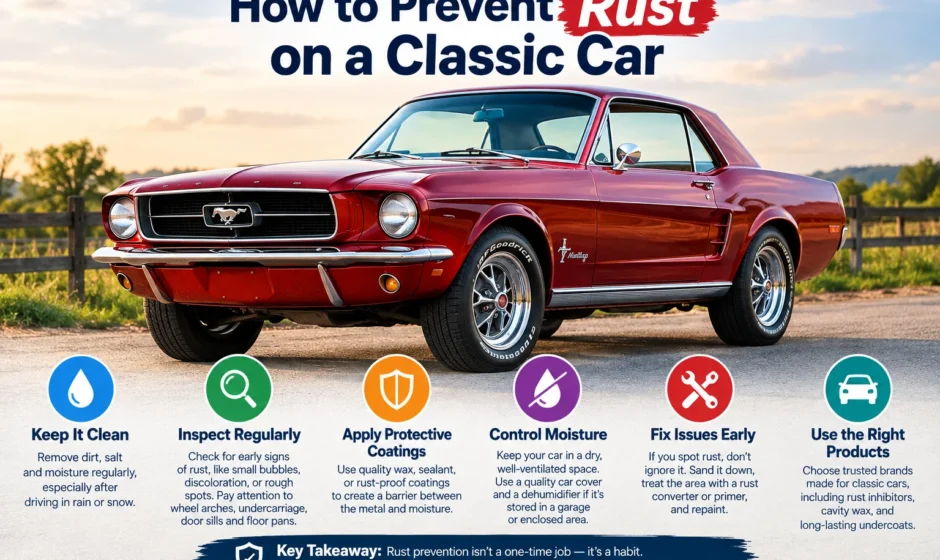

Rust ruins more classic cars than accidents do. It eats quietly. It spreads fast. And it rarely stops on its own. This guide gives you the exact steps real collectors use to stop rust before it starts.
Why Classic Cars Rust So Easily?
Older cars lack modern rust protection. Manufacturers built pre-1985 body panels from thin, uncoated steel. Factories skipped the corrosion coatings modern cars use today. Seam construction makes things worse. Many classic models use lap-welded seams. These seams trap water by design. Moisture sits inside them for weeks. Long periods of sitting still also hurt your car. A parked car doesn’t generate heat. Trapped moisture never gets the chance to evaporate.
Wash Your Classic Car the Right Way
Dirt holds moisture against metal. Moisture triggers rust. Wash your car often, especially after rain or road salt exposure. Focus on the wheel wells first. Focus on the undercarriage next. These areas collect grime fast and hide rust for months. Skip the high-pressure washer on older cars. High pressure strips factory underseal. Use a garden hose instead for gentle, controlled rinsing. Dry your car completely after every wash. Use a microfiber towel for best results. Never let water sit on bare metal overnight.
Wax Every Panel, Including the Hidden Ones
Wax creates a barrier between metal and air. That barrier blocks moisture and slows oxidation significantly. Apply wax to every exterior panel. Then focus on seams, joints, and crevices. Rust always starts in these overlooked spots first. Reapply wax every few months. Classic car paint ages differently than modern clear coats. Older paint needs more frequent protection.
Treat Hidden Cavities and Seams Directly
Wax alone won’t protect internal cavities. Rocker panels, door bottoms, and trunk seams need dedicated treatment. Use a wax-based cavity spray for this job. Products like Fluid Film penetrate seams and displace trapped moisture. Apply them once or twice a year. Consider professional rust-proofing for serious collectors. A trained technician injects inhibitor deep into box sections. This step prevents rust you can’t see forming.
Store Your Classic Car the Right Way
Storage location matters more than most owners realize. A damp garage causes more damage than open-air parking sometimes does. Choose a dry, climate-controlled space whenever possible. Private garages work well. Dedicated storage units work even better. Place a vapor barrier under the car.
Ground moisture rises through concrete and attacks the undercarriage. A simple plastic barrier blocks that moisture completely. Use a breathable car cover, not a tight tarp. Tight covers trap condensation against paint. Trapped condensation causes more damage than no cover at all. Temperature swings create hidden problems too. Garage air absorbs moisture during warm days. That moisture condenses onto cold metal at night.
Control Humidity With a Dehumidifier
Humidity drives rust more than any other single factor. Keep your storage space below fifty percent relative humidity. Run a dehumidifier during humid seasons. Monitor humidity levels with a simple hygrometer. Adjust ventilation whenever readings climb too high. Silica gel packs help in smaller spaces. Place them inside the cabin and trunk. Replace them once they stop absorbing moisture.
Drive It Occasionally, Don’t Let It Sit
Idle cars rust faster than driven cars. Stagnant components trap moisture and never fully dry out. Start your classic car monthly at minimum. Drive it until the engine reaches full operating temperature. Heat evaporates trapped moisture throughout the system. Use the brakes during every drive. Stationary brake components rust together over time. Regular use keeps rotors and calipers clean and functional. Run the air conditioning too, even in winter. This action keeps seals lubricated and reduces internal moisture buildup.
Watch for Early Rust Signs
Small rust spots grow into big problems fast. Catch them early and repair them immediately. Inspect your car every season without exception. Check wheel wells, rocker panels, and floor pans first. These spots rust before anywhere else does. Repair chips and scratches right away. Exposed metal rusts within days in humid conditions. A small touch-up now prevents a major repair later.
Use Rust Inhibitors as a Long-Term Strategy
Rust inhibitors work as a proactive defense, not a cure. Apply them before rust ever appears. Choose an inhibitor rated for automotive use. Apply it to the undercarriage, wheel wells, and door cavities. Reapply annually for continuous protection. Combine inhibitors with quality paint and coatings. High-quality paint blocks moisture on its own. Inhibitors handle the areas paint can’t reach.
The Bottom Line
Rust prevention comes down to controlling moisture everywhere it hides. Wash often, dry completely, and wax thoroughly. Treat hidden seams, store your car properly, and drive it regularly. None of these steps takes much time individually. Together, they add years to your classic car’s life.
Frequently Asked Questions
What is the biggest cause of rust on classic cars?
Trapped moisture causes most classic car rust. Thin, uncoated steel and lap-welded seams make older cars especially vulnerable to trapped water.
How often should I wax a classic car to prevent rust?
Wax your classic car every three to four months. Older paint offers less natural protection than modern clear coats, so it needs more frequent care.
Should I store my classic car with a tight cover or a breathable one?
Always use a breathable cover. Tight covers trap condensation against the paint, which causes more rust than leaving the car uncovered.
Does driving a classic car regularly actually help prevent rust?
Yes. Driving heats components and evaporates trapped moisture. Cars left idle for months often rust faster than cars driven monthly.
Are rust inhibitor sprays worth using on a classic car?
Yes, especially for cavities and seams that paint and wax can’t reach. Apply them annually as part of a complete rust prevention routine.