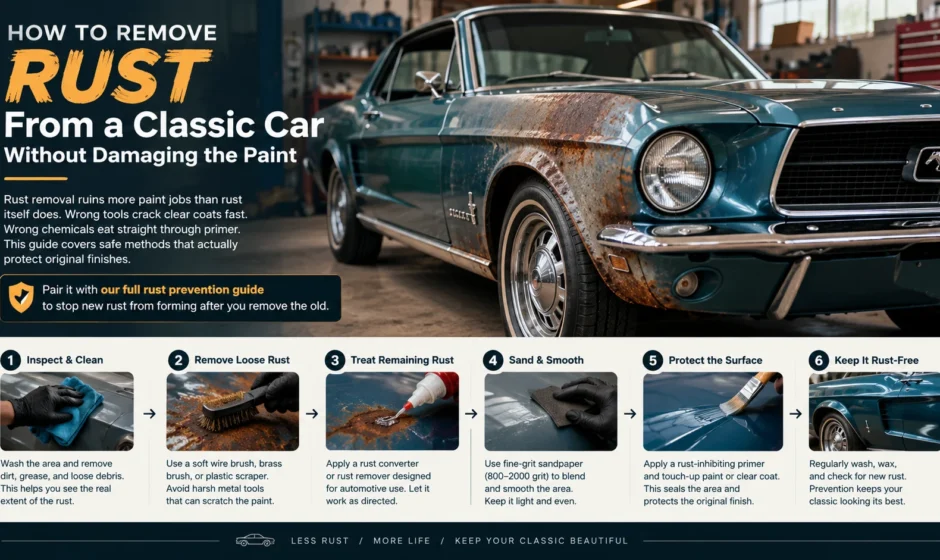

Rust removal ruins more paint jobs than rust itself does. Wrong tools crack clear coats fast. Wrong chemicals eat straight through primer. This guide covers safe methods that actually protect original finishes. Pair it with our full rust prevention guide to stop new rust from forming after you remove the old.
Identify the Rust Type Before You Start
Rust severity determines your entire approach. Guessing wrong here wastes time and money. Surface rust sits on top of the paint. It looks orange and feels rough. Most surface rust responds well to gentle methods. Scale rust runs deeper. It forms larger patches under the paint itself. Scale rust often signals trouble underneath. Penetrating rust eats through metal completely. Small holes or crumbling edges indicate penetrating rust. This level needs professional repair, not home remedies.
Always Test in a Hidden Spot First
Never apply a new product directly to visible panels. Test everything on an inconspicuous area first.
Try behind a wheel well or under the trunk lid. Wait ten minutes and check for discoloration. This step prevents a small mistake from becoming a big one.
Safe Methods for Surface Rust
WD-40 and Similar Penetrating Sprays
WD-40 loosens rust without harming most paint. Spray it directly onto the rusted area. Let it sit for ten minutes before wiping. Scrub gently with a soft cloth afterward. Avoid abrasive pads on painted surfaces. This method works best on light, fresh surface rust.
Vinegar and Baking Soda
This household method works on small spots. Apply vinegar directly to the rust first. Let it soak for several minutes. Sprinkle baking soda over the vinegar next. The reaction helps lift rust particles. Wipe clean with a damp cloth afterward.
Chemical Rust Converters
Rust converters transform rust into a stable compound. They stop corrosion instead of just removing it. Apply them directly over cleaned rust spots. Most converters dry into a paintable surface. Follow the product’s instructions exactly. Timing matters more with converters than most people realize.
Fine Sandpaper for Small Spots
Fine-grit sandpaper works well on small, isolated spots. Use 400-grit or finer for painted areas. Sand gently in small, controlled motions. Stop as soon as bare metal appears. Overworking the area removes healthy paint too. Prime and repaint the spot immediately after sanding.
Methods to Avoid on Painted Panels
Steel wool scratches paint permanently. Avoid it on any visible surface. Save steel wool for bare metal parts only. Coarse sandpaper damages original finishes fast. Classic car paint is often irreplaceable. Choose the finest grit that still does the job. Sandblasting works well, but only on removed or bare panels. Never sandblast painted body sections directly. This method suits frame parts and stripped panels best.
Removing Rust From Hidden Cavities
Rocker panels and door bottoms hide rust well. These areas resist simple surface treatments. Moisture collects here more than anywhere else on the car. Professional sandblasting reaches these spots effectively. Specialists use fine media that won’t warp thin metal. This job usually requires expert equipment most owners don’t own. Apply corrosion protection immediately after sandblasting. Bare metal rusts again within days otherwise. Note that you cannot paint directly over most corrosion coatings.
What to Do After Removing Rust
Clean the area completely once rust is gone. Remove all dust and debris first. A clean surface helps every following step. Apply primer to any exposed bare metal. Let the primer cure fully before painting. Skipping this step invites rust to return quickly. Match your paint color carefully for a seamless repair. Apply two thin coats for the best result. A third coat helps blend edges on some paint types. Finish with wax once the paint cures. Wax seals the repair and blocks new moisture. This final step connects directly to long-term rust prevention.
When to Call a Professional Instead
Structural rust always needs professional attention. Frame rails, floor pans, and load-bearing areas qualify here. DIY repairs on these areas can create real safety risks. Large rust patches also favor professional repair. A shop can match paint and metal work seamlessly. This approach protects your car’s long-term value better than a rushed home fix.
The Bottom Line
Matching the method to the rust type prevents costly mistakes. Light surface rust responds well to gentle, DIY-friendly methods. Deeper rust and structural damage need a professional’s tools and experience. Test everything first, work in thin layers, and protect the area afterward. These habits keep your classic car’s original finish intact for years.
FAQs
Can I remove rust from my classic car without repainting it?
Yes, for very light surface rust. Deeper rust usually exposes bare metal, which needs primer and paint to prevent it from returning quickly.
Is WD-40 safe to use on classic car paint?
Yes, WD-40 is generally safe on painted surfaces. Test it on a hidden spot first, since some older paint types react differently than modern clear coats.
What is the difference between surface rust and scale rust?
Surface rust sits on top of paint and looks orange. Scale rust forms larger patches underneath the paint and usually signals deeper corrosion.
Should I sandblast my classic car’s body panels myself?
No, not on painted panels. Sandblasting works well on bare or removed parts but can warp thin classic car metal and strip paint you want to keep.
Do I need to apply rust prevention after removing rust?
Yes. Skipping prevention lets rust return within months. Wax, primer, and proper storage all help protect the repaired area long-term.