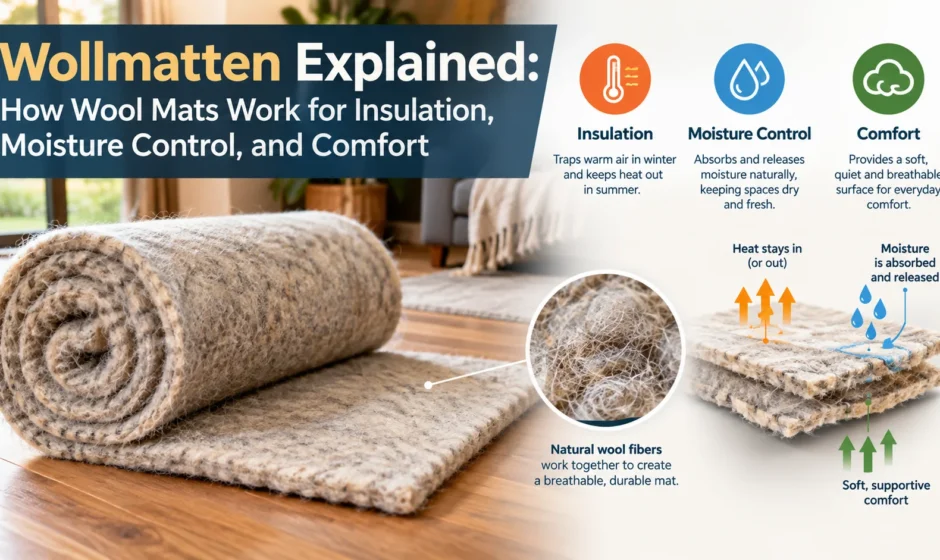

Wollmatten is a German term that means “wool mats.” In English-language searches, people typically use “Wollmatten” to refer to either wool floor mats/rugs or sheep-wool insulation mats used inside buildings. While these are different products, they share the same core advantage: wool’s natural fiber structure helps with warmth, comfort, moisture buffering, and sound absorption.
This guide explains what Wollmatten are, how they work, where they’re used, and what to consider before buying—especially if you’re comparing wool with synthetic alternatives.
What Are Wollmatten?
Wollmatten is a general term, not a brand name. Most Wollmatten are made primarily from sheep’s wool, but the exact composition varies by product and manufacturer.
Depending on the intended use, a Wollmatte may include:
- Mostly wool (high wool content)
- Blended fibers for strength or cost control
- Backing materials (felt, fabric, latex, rubber, etc.)
- Dyes or color treatments
- Binders/adhesives (more common in some insulation products)
- Fire- or pest-resistance treatments (mainly for building insulation)
Because “Wollmatten” can describe multiple product types, the first step is always to confirm whether you’re looking at a floor covering or construction insulation.
How Wollmatten Work (Why Wool Performs So Well)
Wool works differently than many smooth synthetic fibers. Each wool fiber has a natural wave, called crimp, which creates tiny spaces between fibers.
Air pockets provide insulation
Those small spaces trap air. Since air transfers heat slowly, trapped air helps reduce heat flow. That’s why wool mats can feel warmer underfoot and why wool can perform well as insulation when installed correctly.
Elastic fibers resist flattening
Wool is naturally springy. When compressed, it can recover much of its original shape. In floor mats, this helps reduce permanent flattening in normal use. In insulation mats, resilience can help maintain coverage when properly fitted—though installation quality still matters.
Fiber structure helps with sound absorption
Wool’s irregular, dense structure can reduce sound reflections and absorb some acoustic energy. This is one reason rugs and soft floor coverings can make rooms feel less “echoey.”
Wool can buffer moisture vapor
Wool can absorb and release water vapor from the air. This “moisture buffering” can help moderate short-term humidity swings indoors. It does not mean wool is waterproof, and it should not be left wet for long periods.
Thermal Insulation and Temperature Comfort
Wollmatten as floor mats
On hard surfaces like tile, hardwood, or laminate, a wool mat can improve comfort by reducing the cold feel of the floor. This is especially noticeable in bedrooms, living rooms, nurseries, and reading areas.
A wool mat can also add a light insulating layer between you and the floor, which may improve perceived warmth even if it doesn’t change the thermostat setting.
Wollmatten as building insulation
Sheep-wool insulation mats are designed to fit inside building cavities such as:
- Exterior and interior walls
- Attics and roof spaces
- Ceilings
- Floors between levels
In cold seasons, they can reduce heat loss. In warm seasons, they can slow heat entering the building. The real-world performance depends on the product’s thickness and density, the quality of installation, and the overall building design (air sealing, ventilation, moisture control, windows, etc.).
Moisture Control: What Wool Can (and Can’t) Do
Wool is often described as “breathable” because it can interact with humidity in the air.
What wool does well
- Absorbs water vapor when indoor humidity rises
- Releases moisture when air becomes drier
- Helps moderate short-term humidity changes in a room or assembly (when used correctly)
Important limits
- Wool is not waterproof
- A soaked mat can take time to dry and may lose shape
- Any material can develop odor or mold if it stays damp long enough
For building insulation, moisture performance depends on the entire system: roof/wall design, vapor control strategy, ventilation, and leak prevention.
Comfort and Sound Absorption
Comfort underfoot
Wollmatten used as floor coverings are popular because they feel:
- Soft and cushioned
- Warmer than bare hard floors
- Comfortable for sitting, playing, or relaxing
Quieter rooms
A wool rug or mat can help reduce:
- Footstep noise
- Echo and sound reflection in rooms with hard surfaces
- General “room brightness” (acoustic harshness)
Wool insulation inside walls and ceilings can also contribute to sound reduction, but true soundproofing depends on the full construction (layers, decoupling, sealing, and gaps).
Wollmatten as Floor Mats: Best Uses
Wool floor mats are used in both residential and commercial spaces, including:
- Living rooms and bedrooms
- Hallways and entryways
- Home offices
- Hotels, lobbies, and reception areas
- Nurseries and kids’ rooms
- Yoga or meditation corners
Choosing the right floor Wollmatte
Consider:
- Traffic level: high-traffic areas need denser, more durable construction
- Thickness: thicker mats feel softer but may interfere with doors or furniture
- Backing: check whether you need a rug pad for slip resistance
- Color and sunlight: strong direct sun can fade some dyed wool over time
Wollmatten as Building Insulation: What to Know
Sheep-wool insulation mats are not decorative rugs—they’re technical building products. They’re typically sold as batts or rolls designed to fit between studs, joists, or rafters.
Where they’re installed
- Wall cavities
- Attic/loft areas
- Roof assemblies
- Between floors
- Around certain service areas (depending on product guidance)
Installation quality matters
Insulation performance drops if the material is:
- Compressed too much
- Installed with gaps
- Left exposed to leaks
- Used in the wrong assembly without proper moisture management
Fire and pest treatments
Many wool insulation products include treatments to improve fire performance and reduce pest risk. Always verify the manufacturer’s documentation and ensure compliance with local building codes.
Environmental Considerations
Wool is renewable because sheep regrow fleece. Some wool products can also be biodegradable under suitable conditions. However, the overall environmental footprint depends on the entire product and supply chain, including:
- Farming practices
- Processing and washing
- Dyes and chemical treatments
- Backing materials and adhesives
- Shipping distance
- Product lifespan and disposal
If sustainability is important, look for clear material composition, durability, and credible certifications where available.
Indoor Air Quality, Allergies, and Mold
Some people choose wool because it’s a natural fiber. Still, the finished product may include dyes, backing, adhesives, or treatments that affect odor or emissions.
Wool is sometimes described as “hypoallergenic,” but sensitivity varies by individual. Dust accumulation can also trigger symptoms regardless of fiber type, so regular cleaning is important.
Wool can buffer humidity, but it is not mold-proof. Prevent long-term dampness through good ventilation and quick drying after spills.
Pros and Cons of Wollmatten (Quick Summary)
Pros
- Natural wool construction (often high wool content)
- Warm, soft, and comfortable underfoot
- Helpful sound absorption
- Moisture vapor buffering
- Resilient fibers that can recover after compression
- Renewable material; potentially biodegradable (product-dependent)
Cons
- Often more expensive than synthetic mats
- Needs gentler cleaning and careful stain handling