
Every car, bike and scooter ad lists a “cc” number. Buyers see 125 cc, 1500 cc or 2000 cc and wonder what it means. This guide explains the term in plain language. You will learn how engineers calculate it, how it affects power and fuel use, and how to pick the right size.
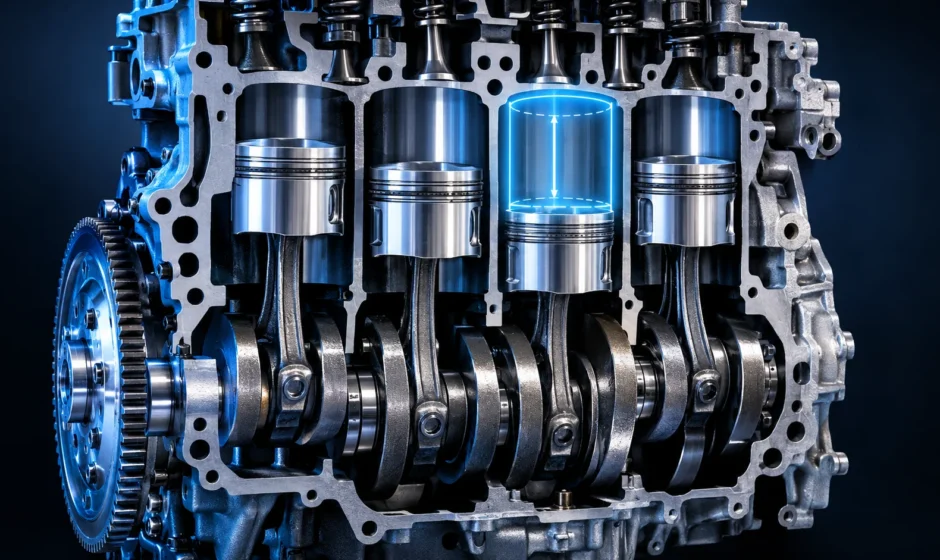
CC measures the total volume that an engine’s pistons sweep inside its cylinders. Mechanics call this figure engine displacement or engine capacity. A bigger number means the engine pulls in more air and fuel with every cycle.
Here is the fastest way to remember it:
- 1 cc equals one cubic centimeter of space.
- 1,000 cc equals one liter.
- 2,000 cc equals a 2.0-liter engine.
- Higher cc usually means more potential power and more fuel use.
What Does CC Stand For?
The letters “cc” abbreviate cubic centimeters. Picture a small cube that measures one centimeter on every side. That cube holds one cubic centimeter of space. Engineers use this unit because engine parts are small and precise.
Many countries prefer liters for cars. A 1600 cc car engine becomes a 1.6-liter engine. Motorcycle and scooter makers stick with cc, since their engines are smaller. Both labels describe the same thing.
How Engine Displacement Works
An engine makes power by burning fuel inside cylinders. Each cylinder holds a piston that slides up and down. The piston travels between two points:
- Bottom dead center (BDC): The piston sits at its lowest position.
- Top dead center (TDC): The piston reaches its highest position.
The space the piston sweeps between those two points is the displacement of one cylinder. Add the swept volume of every cylinder together, and you get the engine’s total cc.
A Simple Way to Picture It
Imagine a bicycle pump. Each pull draws air into the barrel. A larger barrel pulls in more air per stroke. An engine cylinder works the same way. Bigger cylinders draw in more air and fuel, so they burn more each cycle.
How to Calculate Engine CC?
You can work out displacement with a simple formula. Engineers need three measurements:
- Bore: The diameter of the cylinder, in centimeters.
- Stroke: The distance the piston travels, in centimeters.
- Cylinders: The number of cylinders in the engine.
The Formula
Displacement (cc) = π ÷ 4 × bore² × stroke × number of cylinders
Worked Example
Take a four-cylinder engine with an 8.4 cm bore and a 9.0 cm stroke.
- Square the bore: 8.4 × 8.4 = 70.56.
- Multiply by π ÷ 4 (about 0.7854): 70.56 × 0.7854 = 55.42.
- Multiply by the stroke: 55.42 × 9.0 = 498.8 cc per cylinder.
- Multiply by four cylinders: 498.8 × 4 = about 1,995 cc.
That engine sells as a 2.0-liter unit. Manufacturers round the result to a neat number.
CC, Liters and Cubic Inches Compared
Different regions use different units. American muscle car fans talk in cubic inches. Europeans and Asians favor liters. This table lets you convert quickly.
| CC | Liters | Cubic inches |
| 50 | 0.05 | 3.1 |
| 125 | 0.125 | 7.6 |
| 250 | 0.25 | 15.3 |
| 650 | 0.65 | 39.7 |
| 1,000 | 1.0 | 61.0 |
| 1,600 | 1.6 | 97.6 |
| 2,000 | 2.0 | 122.0 |
| 3,000 | 3.0 | 183.1 |
| 5,000 | 5.0 | 305.1 |
Quick conversion rules:
- Divide cc by 1,000 to get liters.
- Multiply cc by 0.061 to get cubic inches.
- Multiply liters by 61 to get cubic inches.
A classic 350 cubic inch American V8 equals roughly 5.7 liters.
Typical CC Ranges by Vehicle Type
Scooters and Mopeds
- 50 cc: Basic city scooters for short, slow trips.
- 110 to 150 cc: Commuter scooters and small motorcycles that handle traffic well.
Motorcycles
- 125 cc: Learner bikes in many countries.
- 250 to 400 cc: Entry-level sport and cruiser bikes with friendly power.
- 600 to 900 cc: Mid-size bikes for experienced riders.
- 1,000 cc and above: Superbikes and touring machines with serious speed.
Cars
- 800 to 1,200 cc: Small city cars that sip fuel.
- 1,300 to 1,800 cc: Family hatchbacks and compact sedans.
- 2,000 to 3,000 cc: SUVs, executive sedans and performance models.
- 4,000 cc and above: Large trucks, luxury cars and V8 sports cars.
Small Engines
Lawn mowers, generators and chainsaws also carry cc ratings. A garden chainsaw often runs between 30 and 60 cc. Generators use a wide range, depending on output.
Does More CC Mean More Power?
Usually, but not always. A larger engine can burn more fuel and air, so it has more potential for power. Yet several other factors matter just as much:
- Turbochargers: A turbo forces extra air into the cylinders. Many small 1.0-liter turbo engines now make well over 100 horsepower.
- Engine speed: An engine that revs higher completes more cycles per minute. That adds power.
- Tuning: Fuel systems, camshafts and software change how much power the same cc produces.
- Engine type: A two-stroke fires once per crankshaft turn. A four-stroke of the same size fires every second turn. Two-strokes often feel stronger for their size.
- Age and technology: A modern 1.6-liter engine often beats an older 2.0-liter design.
Power Versus Torque
Power tells you how fast an engine works. Torque tells you how hard it twists the wheels. Bigger engines often deliver more torque at low speed. That helps when you tow a trailer or climb a steep hill.
CC and Fuel Economy
Larger engines usually drink more fuel. They pull in more air and fuel on every stroke. A 1.0-liter city car normally uses less petrol than a 3.0-liter SUV.
Technology narrows that gap. Modern engines shut off cylinders when you cruise. Hybrid systems help small engines carry heavy cars. Weight and aerodynamics also change fuel use. A light 1.6-liter hatchback can beat a heavy 1.2-liter van.
Tips for Better Fuel Economy at Any Size
- Keep tyres inflated to the recommended pressure.
- Service the engine on schedule.
- Drive smoothly and avoid harsh braking.
- Remove roof racks you do not need.
- Turn the engine off during long stops.
CC, Taxes, Insurance and Licences
Engine size affects your wallet and your paperwork in many places. Rules differ by country, so always check local laws. Common examples include:
- Licence categories: Many countries cap learner motorcycles near 125 cc.
- Import duties: Some governments charge higher duties on bigger engines.
- Annual road tax: Certain regions link yearly fees to cc bands.
- Insurance premiums: Insurers often price larger engines higher, because they reach higher speeds.
- Scooter rules: Some places allow 50 cc mopeds with a simpler licence.
Check your local transport authority before you buy. A small difference in cc can move you into a costlier band.
CC in Turbocharged and Downsized Engines
Car makers now build smaller engines with turbochargers. Engineers call this “downsizing.” A 1.5-liter turbo can replace an old 2.0-liter engine. It delivers similar power and uses less fuel in gentle driving.
Downsizing has trade-offs:
- Pros: Lower emissions, better economy, and strong mid-range punch.
- Cons: Extra parts to maintain, and real-world fuel use rises when you push hard.
Buyers should look at horsepower, torque and real reviews. Cc alone no longer tells the whole story.
Do Electric Vehicles Have CC?
No. Electric cars and bikes have no cylinders or pistons. They use motors that spin on electricity. Makers list power in kilowatts and battery size in kilowatt-hours instead. Hybrids combine both, so they still show the cc of the petrol engine.
How to Find Your Engine’s CC
Try these simple methods:
- Owner’s manual: The specifications page lists the engine size.
- Registration papers: Many documents print the capacity.
- Engine bay or badge: Some cars show “2.0” or “1600” on the trunk or hood.
- Compliance plate: Look near the door frame or under the hood.
- VIN lookup: Enter your vehicle number into a trusted online decoder.
- Manufacturer website: Search your model and year.
For bikes, check the fuel tank sticker, the side panel or the registration card.
How to Choose the Right CC
Match the engine to your daily needs. Ask yourself these questions:
- How far do you drive? Short city trips suit small engines.
- Do you carry heavy loads? Extra passengers or towing call for more torque.
- What is your budget? Bigger engines cost more to buy, tax and fuel.
- Do you ride or drive on highways? Higher cc keeps speed with less strain.
- How experienced are you? New riders should start small.
Sample Recommendations
- Daily commute in a busy city: A 100 to 150 cc scooter or a 1.0 to 1.2-liter car works well.
- Family car with highway trips: Choose 1.5 to 2.0 liters.
- Towing and off-road use: Pick 2.5 liters or more, or a strong diesel.
- Weekend sport riding: Consider 400 to 800 cc for a balanced bike.
Common Myths About CC
Myth 1: More cc always means a faster vehicle.
Weight, gearing and turbo systems all shape speed. A lightweight 600 cc sport bike can outrun a heavy 1,200 cc cruiser.
Myth 2: Small engines break down sooner.
Build quality and maintenance decide reliability. Many small engines run for hundreds of thousands of kilometers.
Myth 3: Big engines always waste fuel.
Modern tech and cylinder shutoff help large engines save fuel at cruising speed.
Myth 4: CC and horsepower measure the same thing.
Cc measures volume. Horsepower measures output. They relate, but they differ.
Myth 5: Two engines with the same cc feel identical.
Design, fuel system and tuning create big differences.
Frequently Asked Questions
What does cc mean on an engine?
CC stands for cubic centimeters. It measures the total volume swept by all pistons in an engine.
Is a 1000 cc engine the same as a 1.0-liter engine?
Yes. One thousand cubic centimeters equal one liter.
Does higher cc mean more horsepower?
Often, but not always. Turbos, tuning and engine speed also shape power.
Is 150 cc good for a motorcycle?
Yes for commuting. A 150 cc bike handles city traffic and short highway runs.
What is a good cc for a car?
Most drivers do well with 1.2 to 2.0 liters. Choose more only if you need towing or speed.
Do electric cars have cc?
No. Electric vehicles use motors and batteries, so makers list kilowatts instead.
How do I convert cc to liters?
Divide the cc number by 1,000. For example, 1,600 cc equals 1.6 liters.
Do two-stroke and four-stroke engines differ at the same cc?
Yes. A two-stroke fires more often, so it usually feels stronger per cc. It also burns more fuel and emits more.
Does cc affect road tax?
In some countries, yes. Check your local rules for exact bands.
Can I increase my engine’s cc?
Yes, through a “big bore” or stroker kit. That work costs money, may void warranties and may break local rules.
Conclusion
CC tells you how much space an engine’s cylinders sweep. It gives a quick sense of engine size and potential power. Yet cc alone never shows the full story. Turbos, tuning, weight and technology all matter. Use the number as a starting point, then compare power, torque, fuel use and running costs before you buy.