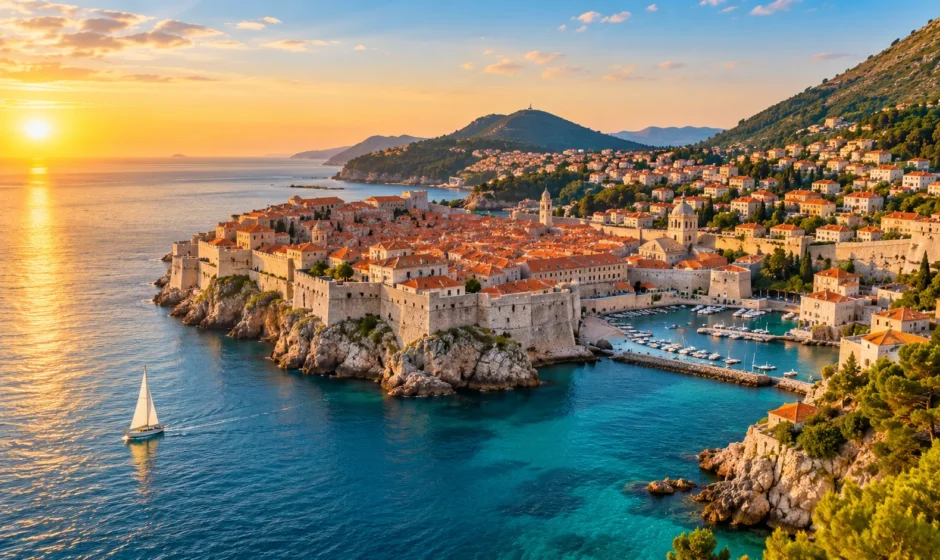

Croatia packs an astonishing range of scenery into a small country. Turquoise bays, Roman ruins, waterfall forests and walled medieval cities sit within a few hours of each other. Travelers keep returning because every region offers something different. This guide covers the best places to visit in Croatia, with practical tips for each stop. You will also find timing advice, sample itineraries and answers to common questions.
Croatia at a Glance
- Capital: Zagreb
- Currency: Euro, since Croatia switched in January 2023
- Language: Croatian, with English widely spoken in tourist areas
- Coast: The Adriatic Sea, with more than 1,000 islands and islets
- Best months: Late May, June and September
- Border rules: Croatia joined the Schengen Area in 2023
- Heritage: Around ten UNESCO World Heritage listings
Top 12 Best Places to Visit in Croatia
Dubrovnik: The Pearl of the Adriatic
Dubrovnik tops most Croatia lists, and it earns that spot. Massive limestone walls ring the Old Town and give it a storybook look. UNESCO added the city to its World Heritage list in 1979. Fans of Game of Thrones will spot familiar streets, because the show filmed King’s Landing scenes here.
Top things to do:
- Walk the city walls, which stretch almost two kilometers around the Old Town.
- Stroll along the Stradun, the polished limestone main street.
- Ride the cable car up Mount Srđ for sunset views.
- Catch a short ferry to Lokrum island for swimming and roaming peacocks.
- Paddle a sea kayak beneath the fortress walls.
Best time: Late May, June and September.
Insider tip: Enter the walls right at opening time. Cruise ship crowds swell by midday.
Split: Where a Roman Palace Meets Modern Life
Split blends a lively modern city with a Roman palace. Emperor Diocletian built his retirement home here around 300 AD. Today cafés, shops and homes fill its ancient halls. Locals still live inside the walls, so the place feels real rather than staged.
Top things to do:
- Explore the palace cellars and the central Peristyle square.
- Climb the bell tower of the Cathedral of Saint Domnius for rooftop views.
- Stroll the Riva waterfront promenade at sunset.
- Hike or bike through the pine forests of Marjan Hill.
- Visit Klis Fortress, a short drive inland.
Best time: May, June and September.
Insider tip: Use Split as your island ferry hub. Boats leave daily for Hvar, Brač and Vis.
Plitvice Lakes National Park: Croatia’s Waterfall Wonderland
Plitvice Lakes National Park looks like a fantasy film set. Sixteen terraced lakes link through dozens of waterfalls. Wooden boardwalks wind across the water, and dense beech forest wraps around every trail. UNESCO lists the park as a natural World Heritage site.
Top things to do:
- Follow the lower lakes route to see the biggest cascades.
- Admire Veliki Slap, Croatia’s tallest waterfall at 78 meters.
- Ride the electric boat across Lake Kozjak.
- Hike the upper lakes for quieter trails.
- Photograph the park under fresh snow in winter.
Park rules ban swimming, so save your swim for the coast.
Best time: April and May for full waterfalls, October for autumn colors.
Insider tip: Book your ticket online for a timed slot in summer. Arrive early to beat the tour buses.
Hvar: Lavender, Nightlife and Island Charm
Hvar mixes glamour with old-world charm. The main town draws yacht owners and party lovers every summer. Lavender fields and sleepy stone villages fill the island’s interior. The Stari Grad Plain, an ancient Greek farming landscape, carries UNESCO status.
Top things to do:
- Climb to the Spanish Fortress for the best sunset in town.
- Hop between the Pakleni Islands by water taxi.
- Wander the quiet streets of Stari Grad.
- Time your visit for June to see lavender in bloom.
- Sample local wine at a family cellar.
Best time: June and September.
Insider tip: Choose those shoulder months for beaches without the party crowds.
Zagreb: The Underrated Capital
Zagreb surprises many first-time visitors. The capital feels relaxed, green and packed with cafés. Medieval lanes and gas lamps give the Upper Town its charm. Grand Austro-Hungarian buildings and leafy squares define the Lower Town.
Top things to do:
- Admire the colorful tiled roof of St. Mark’s Church.
- Ride the funicular, one of the shortest public rail lines in the world.
- Visit the Museum of Broken Relationships for a quirky, moving exhibit.
- Shop for fruit, cheese and flowers at Dolac Market.
- Order coffee on Tkalčićeva Street like a local.
- Return in December for the popular Advent markets.
Best time: Spring, autumn and December.
Insider tip: Spend two days here, then head south. Buses and trains link the city to Plitvice and the coast.
Rovinj: Istria’s Romantic Harbor Town
Rovinj sits on a small peninsula on Istria’s west coast. Pastel houses climb toward a hilltop church. Venetian rule left a strong Italian flavor in the architecture and food. Narrow cobbled lanes lead to hidden galleries and wine bars.
Top things to do:
- Climb the bell tower of the Church of St. Euphemia.
- Walk or cycle through Golden Cape Forest Park.
- Taste truffle pasta and Istrian olive oil.
- Watch the harbor glow at sunset from a waterfront table.
- Take a day trip to the hill town of Motovun.
Best time: May, June and September.
Insider tip: Sleep in town rather than visiting for a day. Evening light and quiet streets reward overnight guests.
Krka National Park: Waterfalls Without the Crush
Krka National Park offers a gentler alternative to Plitvice. The Krka River drops across seven waterfalls through a limestone canyon. Skradinski Buk, the largest cascade, draws the biggest crowds. Wooden trails let you walk right beside the falls.
Top things to do:
- Walk the loop trail around Skradinski Buk.
- Cruise to Visovac island and its small Franciscan monastery.
- See the Roški Slap cascades, which fewer visitors reach.
- Combine the park with a stop in Šibenik.
Swimming rules at the main falls have changed in recent years. Check the park’s official website before you pack a swimsuit.
Best time: April to October.
Insider tip: Go early in the morning or late in the afternoon for calmer trails.
Zadar: Sound, Light and Roman Ruins
Zadar rewards travelers who love unusual sights. The Sea Organ turns passing waves into haunting music beneath the waterfront steps. Nearby, the Greeting to the Sun installation glows with colorful light after dark. Roman forum ruins and the round Church of St. Donatus anchor the old town.
Top things to do:
- Sit on the Sea Organ steps and listen at sunset.
- Watch the Greeting to the Sun light show.
- Tour the Roman Forum and St. Donatus.
- Sail to the rugged Kornati islands.
- Sip maraschino, the cherry liqueur that Zadar made famous.
Best time: June to September.
Insider tip: Check flights early. Zadar’s airport serves many low-cost routes.
Korčula: A Miniature Dubrovnik
Korčula’s walled old town rises from a small peninsula. Streets branch out in a herringbone pattern, which locals say tempers the wind and sun. Locals also claim Marco Polo as their own, though historians still debate that story.
Top things to do:
- Climb the tower of St. Mark’s Cathedral.
- Watch the Moreška sword dance during summer.
- Taste Pošip, the island’s crisp white wine.
- Ferry to the Pelješac peninsula for Plavac Mali wine and Ston oysters.
- Swim from the sandy beaches near Lumbarda.
Best time: May to September.
Insider tip: Rent a scooter or bike to reach the island’s vineyards.
Pula: Ancient Rome on the Adriatic
Pula holds one of the best-preserved Roman amphitheaters in the world. The arena dates to the first century AD. Concerts and film screenings still fill its stone seats today. Beyond the arena, Roman temples and gates dot the old town.
Top things to do:
- Tour the arena and the tunnels beneath it.
- Photograph the Temple of Augustus in the main square.
- Boat out to Brijuni National Park.
- Swim at the rocky coves of the Verudela peninsula.
- Catch a summer film festival screening inside the arena.
Best time: May to October.
Insider tip: Visit in autumn to enjoy Istria’s truffle season.
Mljet: Salt Lakes and Deep Green Forest
Mljet delivers calm, forest and salt lakes. A national park covers much of the western island. Two saltwater lakes, Veliko Jezero and Malo Jezero, connect to the sea. A tiny island in the larger lake holds a former Benedictine monastery.
Top things to do:
- Cycle the flat path around the lakes.
- Kayak across to the monastery island.
- Swim in the warm, sheltered lake water.
- Buy local honey and olive oil in small villages.
Best time: June to September.
Insider tip: Take a ferry from Dubrovnik or Prapratno. Stay overnight to enjoy the quiet.
Šibenik and Trogir: Dalmatian Stone Towns
Šibenik and Trogir showcase Dalmatian stone architecture without the crowds of Dubrovnik. Builders of the Cathedral of St. James joined its stone blocks without mortar, and UNESCO protects the result. St. Nicholas Fortress, also on the UNESCO list, guards the harbor entrance. Trogir sits on a tiny island linked to the mainland by a short bridge. Its medieval lanes hide Romanesque and Renaissance gems.
Top things to do:
- Study the carved stone faces on the Šibenik cathedral.
- Visit St. Nicholas Fortress by boat.
- Wander Trogir’s old town after dark.
- Climb the bell tower of the Cathedral of St. Lawrence in Trogir.
Best time: May, June and September.
Insider tip: Trogir sits near Split airport, so it makes an easy first or last night.
Hidden Gems Worth a Detour
- Bol and Zlatni Rat, Brač: This pebble spit shifts shape with wind and currents. Windsurfers love it.
- Vis and the Blue Cave: Vis stayed closed to foreign visitors until 1989, which preserved its calm. Sunlight makes the nearby Blue Cave glow. Mamma Mia! Here We Go Again also filmed on the island.
- Motovun: This hilltop town overlooks vineyards and truffle forests.
- Makarska Riviera: Long beaches sit beneath the dramatic Biokovo mountain range.
- Poreč: Byzantine mosaics inside the Euphrasian Basilica earned UNESCO recognition.
Best Time to Visit Croatia
- Spring (April to June): Mild weather, blooming hills and full waterfalls greet visitors. The sea stays cool.
- Summer (July and August): Hot days, warm water and packed towns define peak season. Prices climb.
- Autumn (September and October): The sea stays warm, crowds thin and harvest festivals begin. Istria’s truffle season starts.
- Winter (November to March): Coastal towns go quiet and some businesses close. Zagreb shines with its Advent markets.
How to Get Around Croatia
- Buses: Coach services connect all major towns and cost less than car rental.
- Ferries: Regular boats link the mainland to most inhabited islands. Book car spaces early in summer.
- Rental cars: A car gives freedom in Istria and on larger islands. Drive on the right and expect narrow coastal roads.
- Flights: Zagreb, Split, Dubrovnik, Zadar and Pula all have international airports.
- Trains: The rail network stays limited, so plan around buses instead.
The Pelješac Bridge, which opened in 2022, now links southern Dalmatia without a border crossing at Neum. That change makes the drive to Dubrovnik much smoother.
Sample Itineraries
7-Day Highlights Trip
- Days 1 and 2: Explore Dubrovnik and its walls.
- Day 3: Take a ferry or bus to Korčula.
- Days 4 and 5: Base yourself in Split and tour the palace.
- Day 6: Visit Krka National Park or Trogir.
- Day 7: Fly out from Split.
10-Day Grand Tour
- Day 1: Arrive in Zagreb and wander the Upper Town.
- Day 2: Visit Plitvice Lakes National Park.
- Day 3: Relax in Zadar and catch the sunset show.
- Day 4: Explore Krka and Šibenik.
- Days 5 and 6: Enjoy Split and its palace.
- Days 7 and 8: Sail to Hvar for beaches and lavender.
- Days 9 and 10: End in Dubrovnik and fly home.
Money-Saving Tips
- Travel in the shoulder seasons for lower prices and fewer crowds.
- Eat at family-run konobas away from main squares.
- Ask for fish prices by weight before you order.
- Buy picnic supplies at local markets and supermarkets.
- Book ferries and popular park tickets online in advance.
- Pack water shoes, because many beaches have pebbles and sea urchins.
Frequently Asked Questions
What is the best place to visit in Croatia for first-timers?
Dubrovnik, Split and Plitvice Lakes deliver the classic Croatia experience. Together they cover history, coastline and nature.
How many days do you need in Croatia?
Seven days cover the highlights. Ten days let you add islands and inland stops without rushing.
When is the best month to visit?
Late May, June and September offer warm weather with fewer crowds. Sea temperatures peak in August but so do prices.
Is Croatia expensive?
Coastal towns cost more in July and August. Inland areas and off-season trips cost much less.
Do I need a car in Croatia?
Not always. Buses and ferries cover main routes, but a car helps in Istria and on larger islands.
Which Croatian island is best?
Hvar suits nightlife lovers, and Korčula suits history fans. Vis offers quiet, and Mljet offers nature.
Can you swim in Plitvice Lakes?
No. Park rules ban swimming to protect the fragile lakes.
What are the best beaches in Croatia?
Zlatni Rat on Brač, Stiniva on Vis and the Makarska Riviera rank among the favorites.
Is Croatia safe for tourists?
Yes. Crime stays low, though you should still watch your belongings in crowded places.
Do people speak English in Croatia?
Yes. Most people in tourist areas speak good English.
Conclusion
Croatia rewards every kind of traveler. History lovers can walk Roman palaces, and nature fans can chase waterfalls. Beach seekers can swim in clear Adriatic water. Choose two or three regions, travel in the shoulder season and leave room for spontaneous detours. Wherever you land, you will find a country that welcomes visitors warmly.