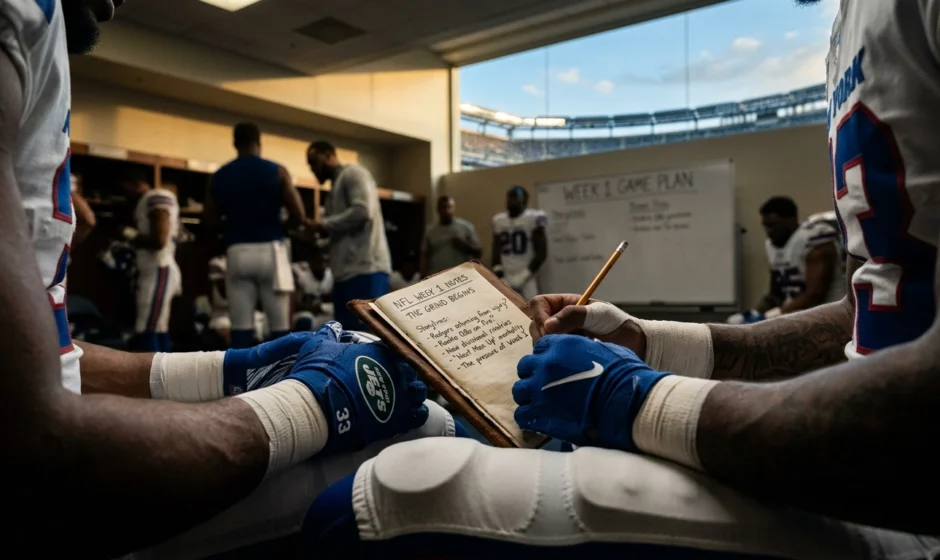

Most Week 1 coverage focuses on final scores and highlight plays. Having spent years actually competing at a high level, I’ve learned that Week 1 reveals something different if you know where to look — not who wins, but how a team is actually built to handle pressure, and whether an offseason of roster moves has translated into genuine chemistry rather than just talent on paper. Building on our full rundown of September’s biggest sporting events, here’s what Week 1 of the 2026 NFL season actually tells us, beyond the box score.
What Defending a Super Bowl Title Actually Feels Like
The Seattle Seahawks open their season against the very team they beat in Super Bowl LX — the New England Patriots — and there’s a specific psychological dynamic to defending a title that doesn’t show up in any preview article. Winning it all changes a locker room’s internal expectations more than its external ones. Every other team circles the champion on their schedule, plays with an extra edge against them, and studies their tape more closely than anyone else’s. From a player’s standpoint, the real test in a title-defense opener isn’t talent — it’s whether a team can match that heightened intensity from an opponent who’s had a full offseason to specifically prepare for them, rather than simply matching last year’s level of execution.
Reading a Rebuilt Receiving Corps Correctly
New England enters this rematch without Stefon Diggs, last year’s leading receiver, and with Romeo Doubs as a notable new addition alongside quarterback Drake Maye. On paper, roster analysis tends to focus on raw talent swapped in and out. What actually matters more in Week 1 specifically is timing — a quarterback and a new receiver building the kind of unspoken chemistry that takes real practice reps to develop, not just talent evaluation. A receiver with excellent measurables who hasn’t built real rapport with his quarterback yet will often look considerably worse in Week 1 than his talent level would suggest, and it’s a common mistake for casual analysis to read too much into that specific gap before players have had real game reps together.
The Cowboys-Giants Opener: What a Coaching Change Actually Tests First
The Dallas Cowboys travel to face the New York Giants in this year’s Sunday Night Football opener — the eighth time in 15 seasons these division rivals have kicked off a season against each other. New York enters under new head coach John Harbaugh, and the specific thing worth watching from a player’s perspective isn’t scheme complexity, it’s communication speed. A new coaching staff installing a new system faces its first real live-speed test in Week 1, and the tell isn’t whether the scheme looks sophisticated on paper — it’s whether players are lining up correctly and executing assignments without visible hesitation, since that hesitation is exactly what a new system exposes before players have internalized it under real game pressure.
Dallas enters with its own new element to evaluate: a defense debuting under new coordinator Christian Parker. The same principle applies on defense as offense — scheme installation looks very different in practice reps than it does against a real opposing offensive coordinator specifically trying to exploit early-season unfamiliarity.
Why Preseason Hype Doesn’t Reliably Predict Week 1 Performance?
One pattern worth understanding from a competitive perspective: the players and storylines generating the most preseason buzz aren’t necessarily the ones who perform best in the opener. Jalen Hurts enters this season facing real pressure after a difficult stretch, and while that narrative drives plenty of preseason coverage, actual Week 1 performance often has more to do with a less visible factor — whether an offensive line has jelled as a real unit, since that foundation affects a quarterback’s performance more than any individual storyline about the player himself.
What to Actually Watch For, Not Just Who Wins?
- Watch pre-snap communication, not just play results — hesitation or obvious confusion reveals more about a team’s actual readiness than a single big play does.
- Watch how a team responds after a mistake, not just whether mistakes happen — a team that recovers its composure after an early turnover or missed assignment is showing you something real about its locker room culture.
- Watch the offensive line’s rhythm specifically, since it affects nearly every other position’s performance more than any single skill-position storyline does.
- Don’t overreact to a single new-player performance, good or bad — real chemistry between new teammates typically takes several real games to develop, not one.
Summary
Week 1 tells you less about who’s actually the better team than it does about which teams have built genuine cohesion versus which have simply assembled talent. The Seahawks’ title defense opener against the Patriots and the Cowboys-Giants rivalry game both offer real tests of exactly that distinction — not just entertaining football, but an early, genuine signal of which rosters are actually built to handle the pressure of a full season, not just a highlight reel.
FAQs
Why does defending a Super Bowl title create extra pressure in Week 1?
Every opposing team specifically studies and prepares for the defending champion more intensely than for other opponents, meaning a title defense opener tests whether a team can match a heightened level of opponent intensity, not just repeat last season’s execution.
Why doesn’t new receiver-quarterback pairing always look good in Week 1?
Genuine chemistry between a quarterback and a new receiver typically takes real game reps to develop beyond practice, meaning talented new additions often look less effective in a season opener than their overall skill level would suggest.
What actually reveals whether a new coaching system is working in Week 1?
Communication speed and pre-snap execution matter more than scheme complexity — hesitation or visible confusion in assignments reveals a system that hasn’t been fully internalized under real game pressure yet.
Does preseason hype accurately predict Week 1 performance?
Not reliably. Individual player storylines often drive preseason coverage, but actual performance frequently depends more on less-visible factors like offensive line cohesion than any single player’s narrative.
What should fans watch for in Week 1 beyond the final score?
Pre-snap communication, how a team responds after a mistake, and offensive line rhythm all reveal more about a team’s actual readiness and chemistry than the final score alone.