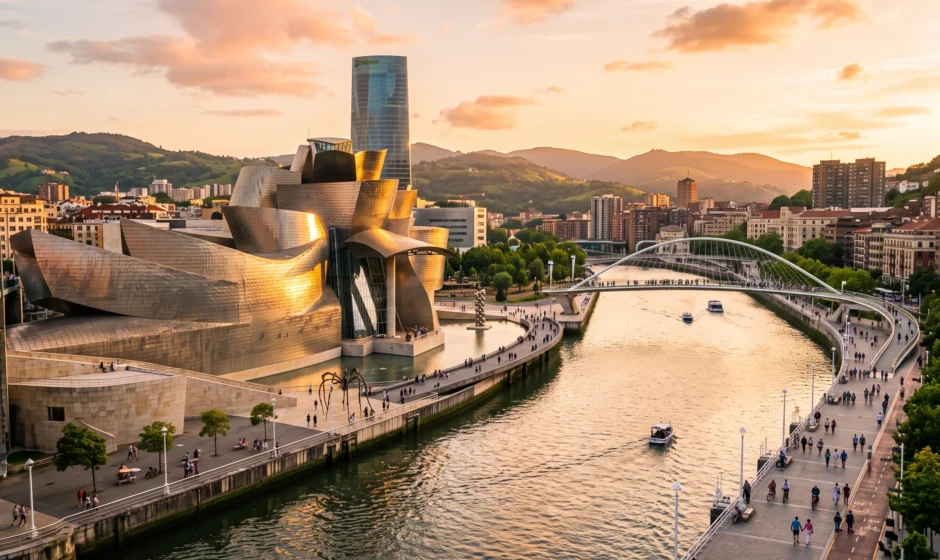

Bilbao transformed itself around one building. The Guggenheim Museum put this once-industrial port city on the global travel map. Beyond the museum, Bilbao keeps a strong Basque character, with an old town built for walking and food that rivals anywhere in the region. This guide covers Bilbao’s top sights and how to plan a visit.
How Many Days Do You Need in Bilbao?
Two days covers the Guggenheim, old town, and a proper pintxos crawl. A third day allows a short trip to nearby San Sebastián or the coastal town of Getxo.
The Guggenheim Museum
Frank Gehry’s titanium-clad building remains one of the most recognizable pieces of contemporary architecture in Europe. The museum’s collection focuses on modern and contemporary art, though many visitors come primarily for the building itself. The riverside plaza outside includes Jeff Koons’ large flower sculpture, Puppy, a popular photo stop even for visitors skipping the museum.
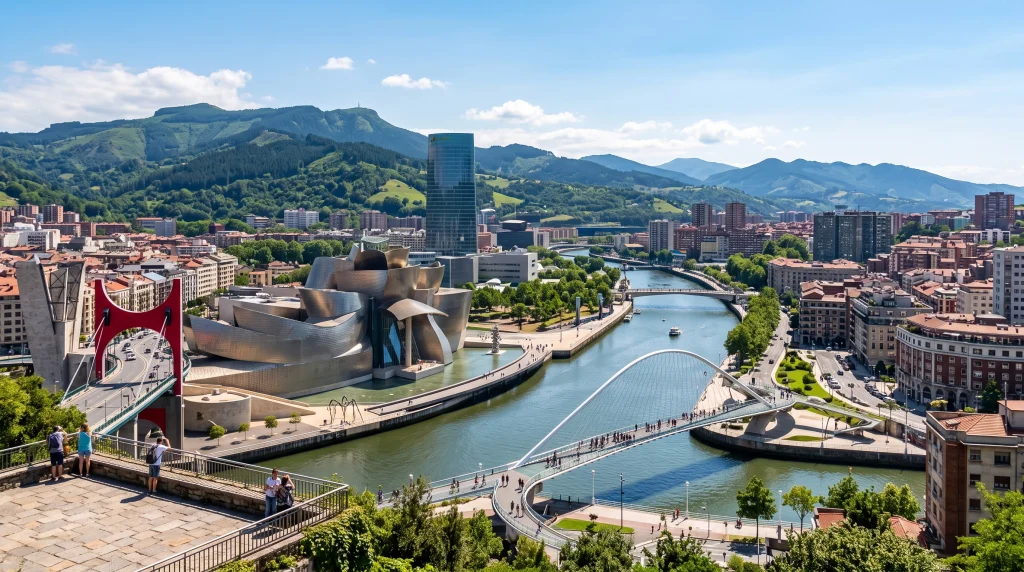
Casco Viejo
Bilbao’s old town, known locally as Las Siete Calles, or the Seven Streets, centers on a compact historic core. These streets house a dense concentration of pintxos bars, shops, and small squares, easily explored in a single afternoon. Most major sights sit within a 30-minute walk of each other, connected by a scenic riverside promenade along the Nervión.
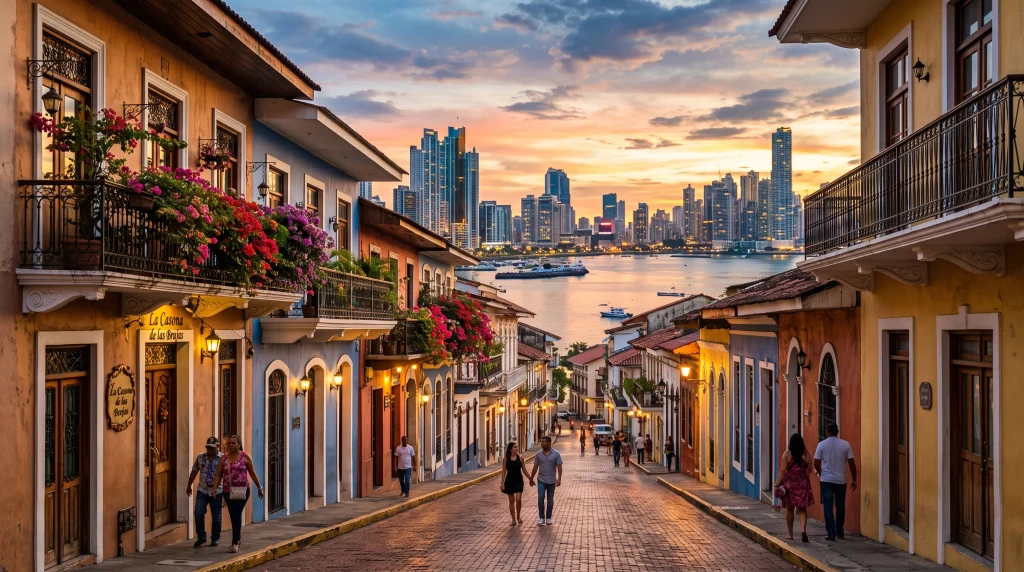
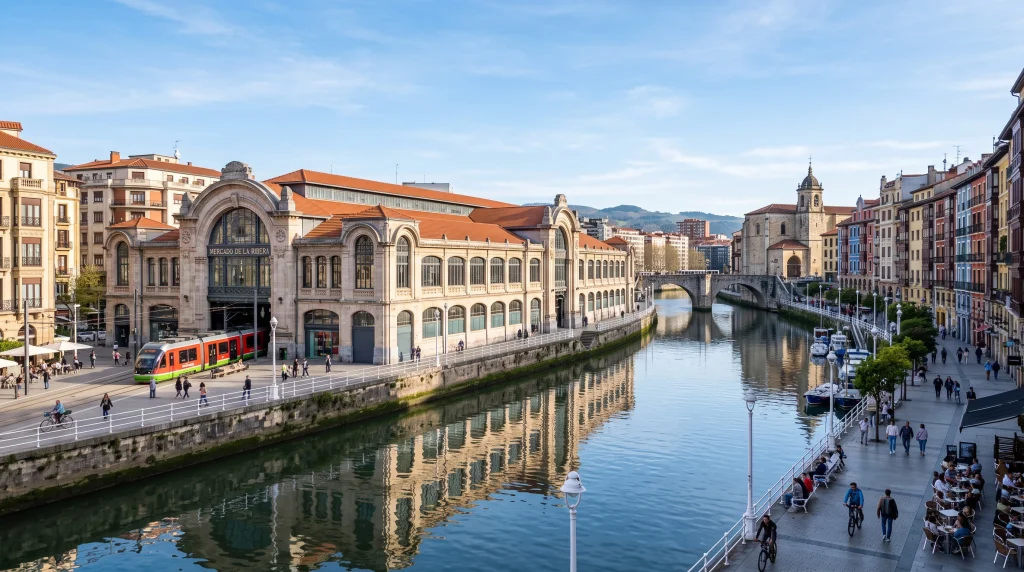
Mercado de la Ribera
Mercado de la Ribera ranks among the largest covered markets in Europe, with around 180 stalls selling seafood, produce, and prepared food. It sits just a few minutes from the old town and works well for a casual lunch stop between sightseeing.
Pintxos and Basque Food
Pintxos culture runs as deep in Bilbao as in San Sebastián, with bars in Casco Viejo serving elaborate small plates. Basque cuisine leans heavily on seafood and simple, high-quality ingredients, reflecting the region’s coastal geography.

Day Trips from Bilbao
Getxo, a coastal town with a historic hanging bridge, sits under 30 minutes away and makes an easy half-day trip. San Sebastián, about an hour by bus or car, pairs naturally with Bilbao for a longer Basque Country itinerary.
Where to Stay
Casco Viejo: Best for walkability and nightlife, close to pintxos bars and the market.
Abando: Central and convenient, close to the train station and a short walk from the Guggenheim.
Indautxu: A more residential option with good access to both the old town and museum district.
Best Time to Visit Bilbao
Late spring and early fall offer the most comfortable weather, with lower rainfall than winter months. Bilbao gets more rain than southern Spanish cities, so packing for occasional wet weather is worthwhile year-round.
Final Tips
Pair Bilbao with San Sebastián if time allows, since the two cities complement each other well within a short travel distance. Book Guggenheim tickets online in advance during peak travel months to skip longer entry lines. For a broader comparison with Spain’s other major cities, see our full guide to the best cities to visit in Spain.
For a broader comparison with Spain’s other major cities, see our full guide to the best cities to visit in Spain
Frequently Asked Question
How many days is enough for Bilbao?
Two days covers the Guggenheim, old town, and a proper pintxos crawl. A third day allows a short trip to San Sebastián or the coastal town of Getxo.
Is Bilbao worth visiting for tourists?
Yes — the Guggenheim Museum alone draws visitors from around the world, and the surrounding old town and food scene hold up well beyond the museum. It’s also a practical base for exploring the wider Basque Country.
Is Bilbao cheap or expensive?
Bilbao is generally more affordable than Barcelona or Madrid, particularly for accommodation. Pintxos bars also offer a budget-friendly way to eat well without sit-down restaurant prices.
What is the best month to visit Bilbao?
Late spring (May-June) and early fall (September) offer the most comfortable weather with lower rainfall than winter. These months also avoid peak summer crowds.
Is it better to stay in Bilbao old town or city center?
Casco Viejo (old town) suits travelers who want walkability and nightlife close to pintxos bars. Abando (city center) works better for those prioritizing train access and a short walk to the Guggenheim.
Which month is the coldest in Bilbao, Spain?
January is typically Bilbao’s coldest month, with daytime temperatures averaging around 12-13°C. Bilbao’s Atlantic coastal location also means winter brings more rain than in southern Spanish cities.